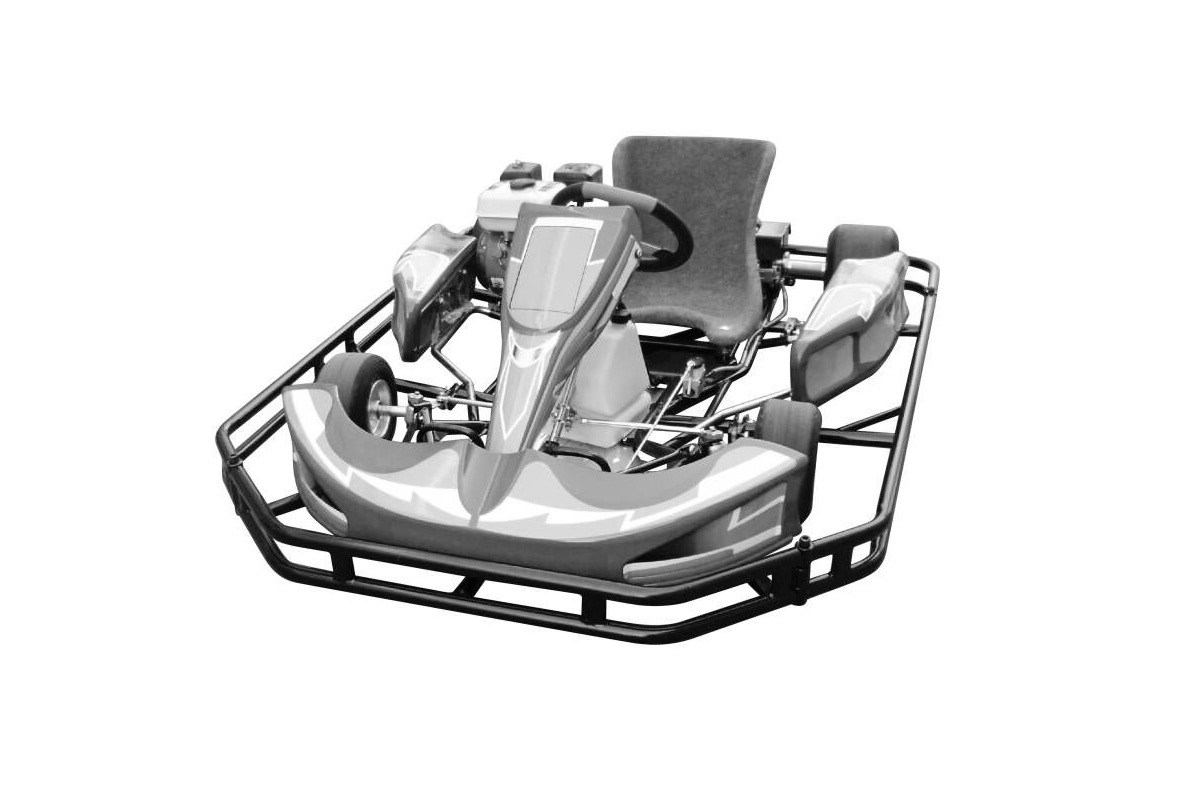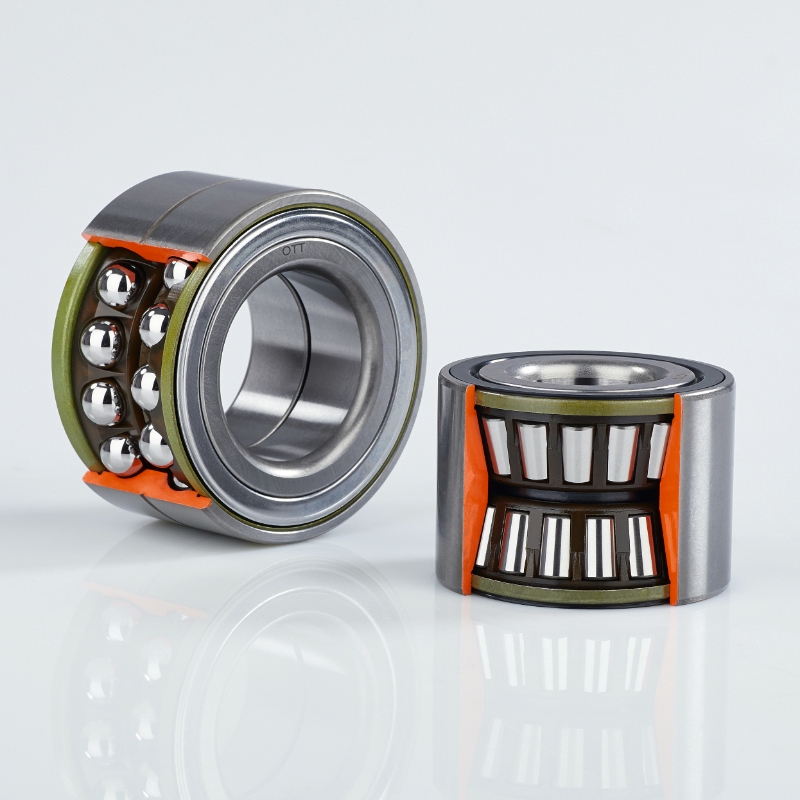
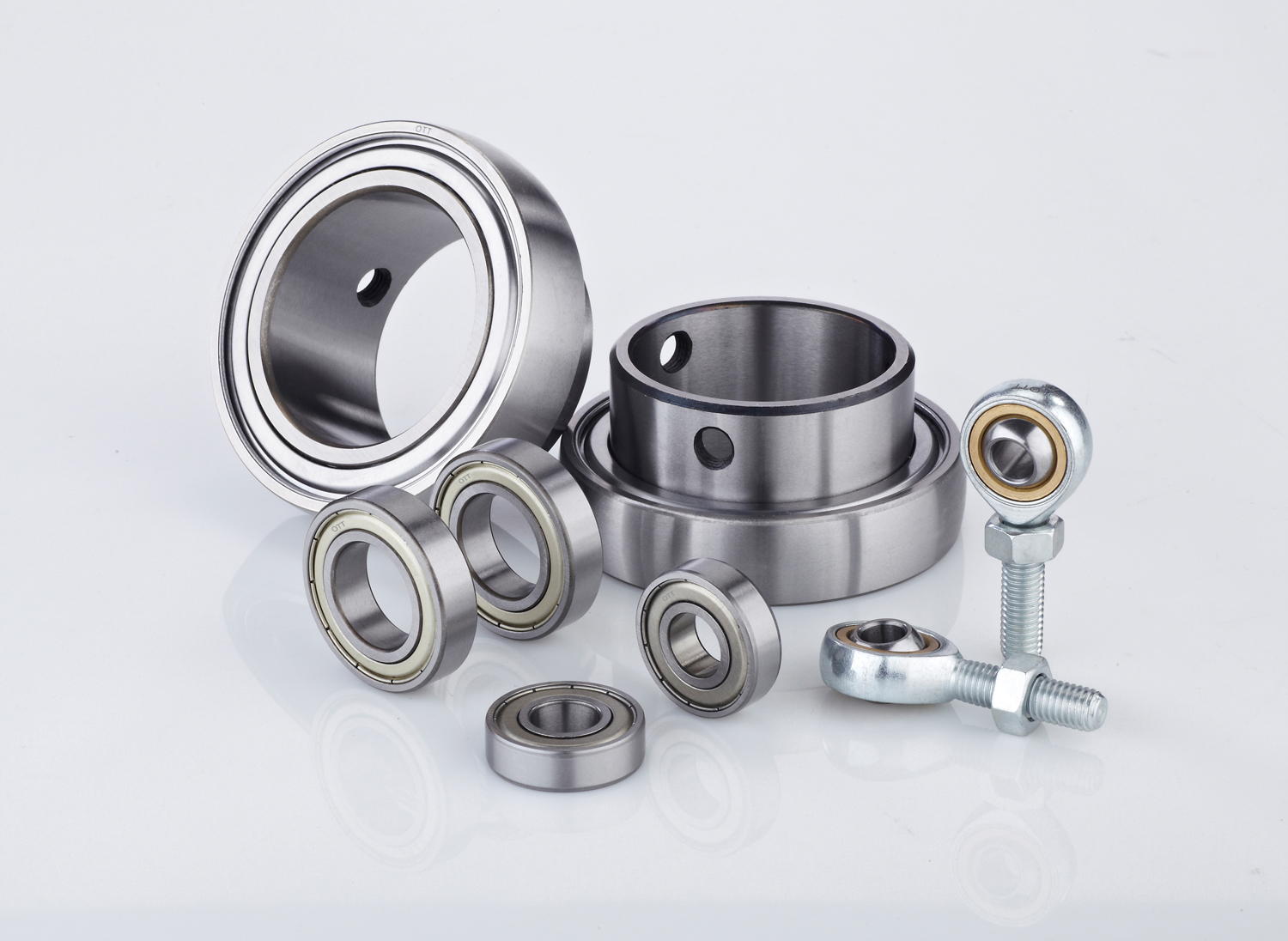
Every go-kart — from a rental fleet cruiser to a CIK-FIA championship racer — relies on 10 to 15 bearings to keep wheels spinning, the axle turning, and steering responsive. Choosing the right bearing for each position directly affects lap times, maintenance intervals, and operating costs. This guide covers every go-kart bearing size, type, and configuration, written from the perspective of a bearing manufacturer that supplies kart distributors worldwide.
Quick Answer: The Most Common Go-Kart Bearing Sizes
If you just need to know what bearing to order, here is the quick reference. The most common metric kart bearing sizes are 6205 (25x52x15mm) for front wheel hubs, 6206 (30x62x16mm) for rear axles and crankcase, 6003 (17x35x10mm) for front spindles, and 6905 (25x42x9mm) for steering columns. For American-style yard karts, common imperial sizes are 5/8" bore for front wheels and 1" bore for rear axles.
The rest of this guide explains why those sizes are used, what configuration (open, shielded, or sealed) to choose, and what to look for in bearing quality.
Go-Kart Bearing Size Chart: Complete Reference
| Model | Dimensions (d x D x B) | Position | Kart Type |
|---|---|---|---|
| 6205 | 25 x 52 x 15 mm | Front wheel hubs | Racing & rental karts |
| 6206 | 30 x 62 x 16 mm | Rear axle / crankcase | All kart types |
| 6003 | 17 x 35 x 10 mm | Front spindles | Racing karts |
| 6905 | 25 x 42 x 9 mm | Steering column | All kart types |
| 6203 | 17 x 40 x 12 mm | Engine accessories | 2-stroke & 4-stroke |
| PB8 / PB10 | 8 or 10 mm bore | Steering shaft uniball | Racing karts |
| COS8 | M8 male thread | Tie rod ends | All kart types |
Imperial sizes used on American-made yard karts and mini bikes: 5/8" (15.875mm) bore for front wheels, 3/4" (19.05mm) bore for mid-size karts, and 1" (25.4mm) bore for rear axles. These correspond to standard bearing numbers like 99502 (5/8" x 1-3/8" x 7/16") for front hubs.
Where Each Bearing Goes in a Go-Kart
Understanding bearing positions helps you choose the right size and configuration for each application.
Front Wheel Bearings (6205, 6003)
Front wheel bearings handle the lowest loads but spin at the highest speeds during cornering. The 6205 (25x52x15mm) is the standard for most 25mm spindle racing karts, while the 6003 (17x35x10mm) fits karts with smaller 17mm front spindles. Most front hubs use a pair of bearings — one on each side — with a spacer in between. For racing, open bearings are preferred because they produce the least drag. For rental operations, sealed 6905-2RS bearings extend maintenance intervals.
Rear Axle Bearings (6206, Insert Bearings)
The rear axle carries the heaviest loads — the weight of the driver plus acceleration and braking forces all pass through these bearings. The 6206 (30x62x16mm) is the standard for 30mm live rear axles. For karts with bearing carrier housings, insert bearings with set screws (like the 5090) allow quick field replacement without a press fit. Rear axle bearings for 40mm and 50mm shafts use 6208 and 6210 bearings respectively.
Steering Bearings (6905, PB8, PB10, COS8)
Steering systems use several bearing types. The 6905 (25x42x9mm) is a thin-section bearing that fits tight steering column assemblies. Uniball bearings (PB8, PB10) are self-aligning spherical bearings that compensate for shaft misalignment — critical for responsive steering feel. Rod end bearings (COS8) connect tie rods to the steering linkage, with chrome-plated bodies and brass-lined spherical joints for smooth articulation and corrosion resistance.
Engine Bearings (6206, 6203)
The main crankcase bearing is typically a 6206 open bearing — the same size as the rear axle bearing but used in a different application. Open configuration is mandatory here because sealed bearings add friction that robs engine power. The 6203 (17x40x12mm) handles water pump, clutch drum, and other accessory positions across both 2-stroke and 4-stroke kart engines.
Open vs Shielded vs Sealed: How to Choose
This is the most important configuration decision for kart bearings, and it depends entirely on your operating environment.
| Configuration | Friction Level | Protection | Maintenance | Best For |
|---|---|---|---|---|
| Open | Lowest | None | Every race weekend | Sprint racing, competition |
| Shielded (ZZ) | Low | Moderate | Monthly | Club racing, indoor tracks |
| Sealed (2RS) | Moderate | Full | 200-500 hours | Rental fleets, outdoor, wet |
For competitive racers: Use open bearings on front wheels and rear axle. The friction difference between open and sealed bearings translates to measurable lap time gains — typically 0.1-0.3 seconds per lap on a 45-second circuit. Re-grease and inspect after every race weekend.
For rental kart operators: Use 2RS sealed bearings everywhere. The rubber contact seals retain grease and exclude water, mud, and track debris. This extends bearing life to 200-500 operating hours — critical for rental operations where downtime means lost revenue. The small friction penalty is irrelevant for rental speeds.
For club racers: ZZ (metal shielded) bearings offer a practical middle ground. The non-contact metal shields keep large debris out while adding minimal drag compared to rubber seals.
What Makes a Quality Go-Kart Bearing? A Manufacturer's Perspective
Most go-kart bearings sold online come from trading companies that buy generic bearings and resell them. Here is what actually matters inside the bearing — the factors that separate a smooth, long-lasting bearing from one that fails mid-race.
Material: GCr15 Bearing Steel (AISI 52100)
High-quality kart bearings use GCr15 chromium bearing steel, the international standard for ball bearing rings. After heat treatment, GCr15 reaches a surface hardness of HRC 60-64, providing the fatigue resistance needed for sustained high-RPM operation. Lower-grade bearings may use carbon steel or recycled material that reaches only HRC 55-58 — these bearings wear faster and develop play sooner.
Precision Grade: P6 (ABEC 3)
The precision grade determines dimensional tolerances and running accuracy. P6 grade (equivalent to ABEC 3) is the standard for quality kart bearings, with bore tolerances of 0 to -8 micrometers and roundness within 5 micrometers. This precision directly affects how smoothly the bearing spins and how evenly the load distributes across the balls. Bearings sold without a stated precision grade are typically P0 (normal grade) — acceptable for non-critical applications but inferior to P6 for racing.
Ball Quality
The balls inside the bearing are equally important. Quality kart bearings use G10-grade steel balls with a surface roughness below 0.025 micrometers. Cheaper bearings use G25 or G40 balls with rougher surfaces, which create more friction and generate more noise during operation.
Heat Treatment
Proper heat treatment is what gives bearing steel its hardness and fatigue life. A quality manufacturer uses controlled-atmosphere furnaces with precise temperature profiles (typically 830-850°C austenitizing followed by oil quenching and tempering at 150-180°C). The resulting microstructure — fine-grained tempered martensite with uniformly distributed carbides — determines how many millions of revolutions the bearing can sustain before fatigue failure.
Signs of Worn Go-Kart Bearings
Knowing when to replace bearings prevents on-track failures and keeps your kart performing at its best.
- Roughness when spinning by hand — A healthy bearing spins freely with a smooth, quiet whir. Roughness, grinding, or clicking indicates damaged raceways or contaminated grease.
- Radial play (wobble) — Grip the wheel or axle and try to rock it perpendicular to the shaft. Any detectable play means the bearing is worn beyond its useful life.
- Noise under load — A growling or humming noise that changes with speed often points to a failing wheel or axle bearing. The noise typically gets louder in turns that load the affected side.
- Heat after running — Touch the hub or bearing housing immediately after a session. Excessive heat (painful to touch) suggests a bearing that is binding, under-lubricated, or misaligned.
- Uneven tire wear — A worn bearing allows the wheel to tilt slightly, causing one edge of the tire to wear faster than the other. Check for this during regular tire inspections.
How to Choose the Right Go-Kart Bearing
Step 1: Measure the shaft diameter
The shaft diameter determines the bearing bore size. Measure the actual shaft — do not guess. Common shaft diameters are 17mm, 25mm, and 30mm for metric karts, or 5/8", 3/4", and 1" for imperial karts.
Step 2: Check the housing dimensions
The housing or hub determines the outer diameter. If replacing an existing bearing, measure the bore of the housing directly or read the numbers stamped on the old bearing.
Step 3: Select the configuration
Choose open for racing, ZZ for club, or 2RS for rental — based on the comparison table above.
Step 4: Verify the precision grade
For any competitive application, specify P6 grade or better. For rental karts, standard P0 is acceptable but P6 is still preferred for smoother operation and longer life.
Step 5: Consider the source
Buy from a bearing manufacturer or authorized distributor — not a random marketplace seller. A manufacturer like OTT controls quality from raw material through final testing and can provide consistent quality across every batch, which matters when you are buying hundreds or thousands of bearings for a fleet or distribution.
Metric vs Imperial: A Kart Bearing Conversion Table
European and Asian racing karts use metric bearings (6000, 6200, 6300 series), while American yard karts and mini bikes often use imperial (inch) sizes. Here is the conversion for common sizes:
| Imperial Size | Metric Equivalent | Common Part Number | Application |
|---|---|---|---|
| 5/8" x 1-3/8" x 7/16" | 15.875 x 34.925 x 11.112 mm | 99502H | Front wheels (yard karts) |
| 3/4" x 1-3/4" x 1/2" | 19.05 x 44.45 x 12.7 mm | — | Mid-size kart hubs |
| 1" x 2" x 9/16" | 25.4 x 50.8 x 14.29 mm | — | Rear axle (yard karts) |
If you are building or maintaining a kart fleet, standardizing on metric bearings (6000/6200 series) simplifies inventory management — metric sizes are available worldwide from multiple manufacturers, while imperial sizes can be harder to source outside the US.
Next Steps
For a complete catalog of OTT go-kart bearings with full specifications, visit our Go-Kart Bearing Product Page. You can also explore specific products like the 6206 rear axle bearing, PB8 steering uniball, or COS8 rod end bearing.
Related guides you may find useful:
- Go-Kart Racing Application Guide — detailed overview of where bearings go in a kart
- Wheel Hub Bearing Technology — our C-A carbonitriding heat treatment explained
- About OTT Bearing — factory tour and quality certifications