Wheel bearings are one of those components you don't think about until they fail — but when they do, you need to know whether it's the front or rear that's giving you trouble. The distinction matters because the symptoms are different, the parts are different, and the repair procedures are different.
This guide covers everything you need to distinguish front from rear wheel bearing problems, identify which side is failing, and understand what's involved in the repair.
Why Front and Rear Wheel Bearings Are Different
Wheel bearings support the rotation of the wheel while carrying the full weight of the vehicle. But the front and rear bearings operate under different conditions:
Front wheel bearings handle three forces simultaneously:
- Radial load (vehicle weight)
- Axial load (cornering forces)
- Steering forces and changes in direction
On front-wheel-drive vehicles, they also transmit drive torque through the CV axle. This combination of forces makes front bearings work harder, which is why they tend to fail slightly more often than rears on FWD vehicles.
Rear wheel bearings on non-driven axles (rear of a FWD car) carry primarily radial and axial loads from vehicle weight and cornering — no drive torque. This is a simpler load profile, and the bearings are often less expensive and easier to replace.
On rear-wheel-drive (RWD) or all-wheel-drive (AWD) vehicles, the rear bearings also transmit drive torque, making them comparable in complexity and stress to front bearings on FWD vehicles.
Construction Differences
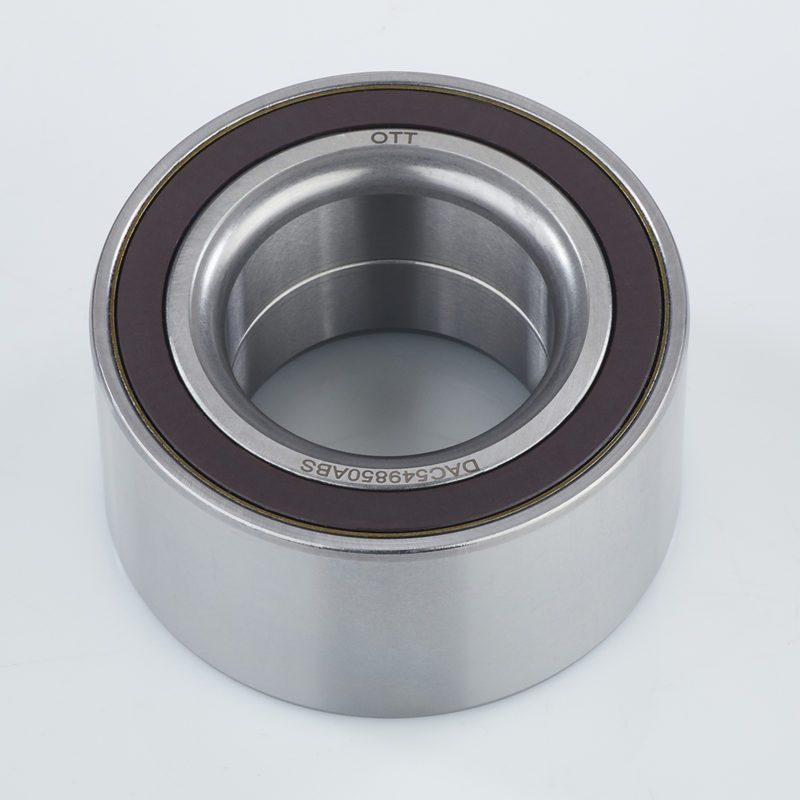
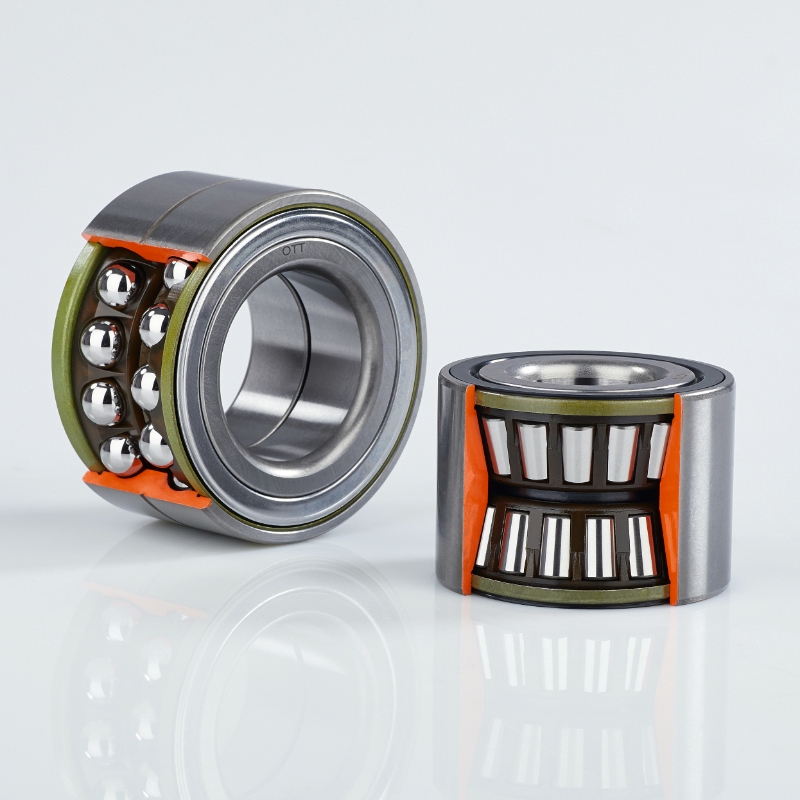
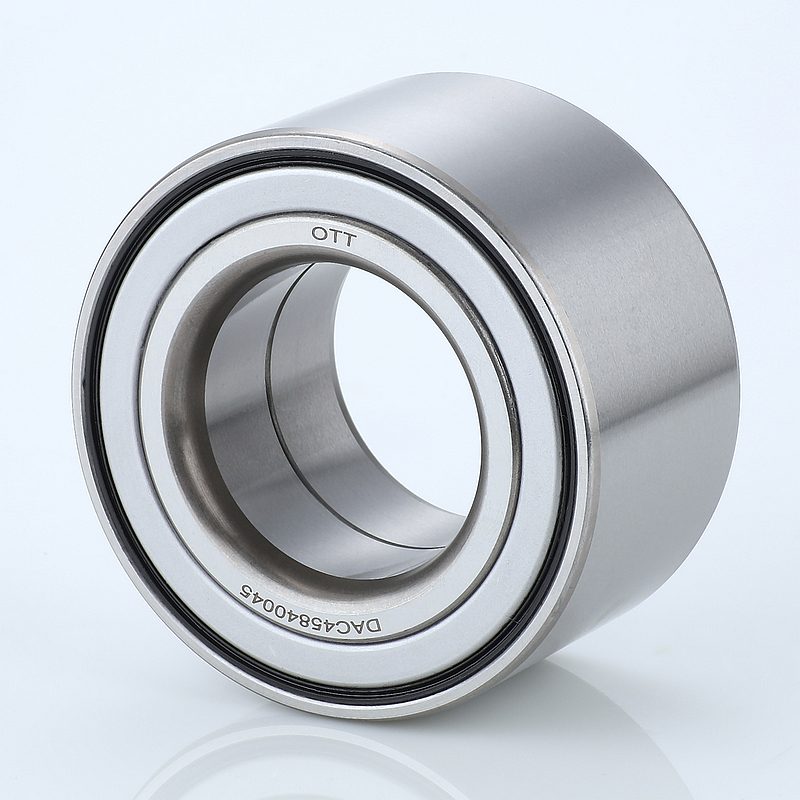
Modern front hub bearing units (Generation 3): Most cars built after 2000 use pre-assembled hub bearing units for the front axle. These are self-contained assemblies that include the inner and outer races, ball or tapered roller elements, seals, and typically an integrated ABS reluctor ring. They bolt directly to the steering knuckle and require no adjustment — replace as a unit.
Rear bearing designs vary by vehicle:
- Hub unit (most modern vehicles): Same design as front — bolt-on, sealed, pre-assembled
- Press-fit bearing (older vehicles): The bearing is pressed into the rear knuckle or axle housing; replacement requires a hydraulic press and more disassembly
- Adjustable tapered roller bearing (older trucks and RWD): Two separate tapered rollers in an adjustable pre-load arrangement; requires careful adjustment during installation
Symptoms: Front vs Rear
Front Wheel Bearing Symptoms
Noise that changes with steering: This is the classic front bearing symptom. As you turn the steering wheel, weight shifts between the left and right bearings. A failing bearing produces more noise when it's under higher load.
- Noise gets louder when turning LEFT → right front bearing is likely failing
- Noise gets louder when turning RIGHT → left front bearing is likely failing
Vibration in the steering wheel: As a front bearing deteriorates, you may feel vibration through the steering wheel, especially at highway speeds. This differs from tire imbalance because it persists even after tire balancing.
ABS warning light: Many front hub assemblies include an integrated ABS sensor. When the bearing fails or has excessive play, the sensor signal can become erratic, triggering the ABS warning light.
Rear Wheel Bearing Symptoms
Noise that's less direction-sensitive: Rear bearing noise still changes somewhat with swerving (less dramatically than front), but it's often a more constant rumble or grinding. Some drivers describe it as road noise that doesn't go away.
Noise location: Try to identify whether the sound comes from the front or rear of the vehicle by driving over a smooth road section. Rear bearing noise is often clearest at 40–60 mph and may diminish at higher speeds (unlike tire noise, which usually increases).
Wheel wobble: With the vehicle safely lifted, grip the top and bottom of each rear wheel and try to rock it. Any detectable movement (play) suggests a worn bearing — the wheel should be completely rigid.
Diagnosis: How to Pinpoint the Failing Bearing
Step 1 — The swerve test (front bearings): At 50 mph on a safe, empty road, gently swerve left and right several times. Listen for noise changes. This test shifts load between bearings and amplifies noise from the failing one.
Step 2 — Lift and spin: With the car safely on jack stands, spin each wheel by hand. A good bearing spins freely and silently. A bad one feels rough, notchy, or makes a grinding noise when spun.
Step 3 — Check for play: Grip the wheel at 12 o'clock and 6 o'clock, then rock it in and out. Any detectable play (more than a millimeter of movement) indicates a worn bearing.
Step 4 — Drive belt off (front wheels): On FWD vehicles, putting the transmission in neutral while moving lets you check whether the noise goes away without drive torque — useful for isolating CV joint noise from bearing noise.
Replacement Overview
Front Wheel Bearing Replacement
Most modern front hub assemblies are replaced as a unit:
- Remove the wheel
- Remove the brake caliper and rotor
- Disconnect the ABS sensor connector
- Remove the hub nut (center axle bolt) — typically 32–36mm, torqued to 180–250 Nm
- Remove the hub assembly bolts from the steering knuckle
- Install new hub unit, torque to spec
- Reconnect ABS sensor, install brake components
Special tools needed: hub nut socket, torque wrench. On some vehicles, a slide hammer or hub puller is required.
Rear Wheel Bearing Replacement
For bolt-on hub units (similar to front):
- Same general process as front, but without the CV axle involved
For press-fit bearings:
- Requires a bearing press or hydraulic press
- The old bearing must be pressed out of the knuckle, and the new one pressed in square
- More labor-intensive; often done at a shop
Typical Costs (Parts + Labor)
| Application | Parts Cost | Labor | Total Estimate |
|---|---|---|---|
| Front hub unit (FWD) | $80–250 | $100–200 | $180–450 |
| Front hub unit (AWD) | $120–350 | $150–250 | $270–600 |
| Rear hub unit (FWD) | $60–180 | $80–150 | $140–330 |
| Rear press-fit bearing | $30–80 | $150–300 | $180–380 |
| Rear tapered (RWD truck) | $40–100 | $100–200 | $140–300 |
Note: High-performance vehicles, luxury brands, and AWD systems can be significantly more expensive.
When to Replace: Don't Wait
Wheel bearings don't fix themselves. A bearing that's making noise is already damaged, and the damage accelerates over time. More importantly, a severely worn bearing can cause:
- Loss of wheel alignment and handling precision
- Brake rotor runout (from wheel wobble)
- ABS malfunction
- In extreme cases, wheel separation from the vehicle
The moment you hear grinding, rumbling, or feel vibration from a wheel, have the bearing inspected. Most shops can diagnose the issue in 15–20 minutes on a lift.
How OTT Supplies Front and Rear Wheel Bearings
At OTT Bearing, we manufacture both hub bearing units and loose bearing assemblies for the automotive aftermarket:
- Hub units (Generation 2 and 3): Pre-assembled, sealed, ABS-ready. Available for common vehicle platforms across North America, Europe, and Asia.
- Tapered roller bearings: For older RWD vehicles and commercial applications
- Quality standard: IATF 16949 certified. All hub units pass vibration testing (Z3V3 noise grade) before shipment.
For distributors sourcing front or rear wheel bearing units at volume, we offer direct factory pricing with OEM cross-references available on request.