"Hub bearing" and "wheel bearing" — you'll see both terms on parts websites, in repair guides, and from mechanics. They're often used as synonyms, but there's an important technical distinction worth understanding, especially if you're sourcing parts or diagnosing a noise.
The Technical Difference
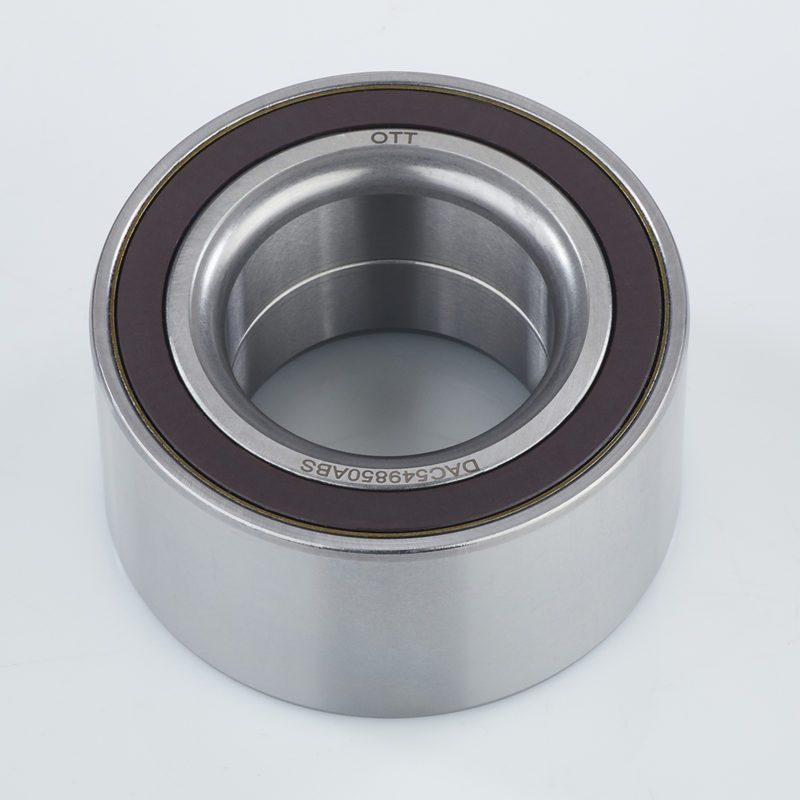
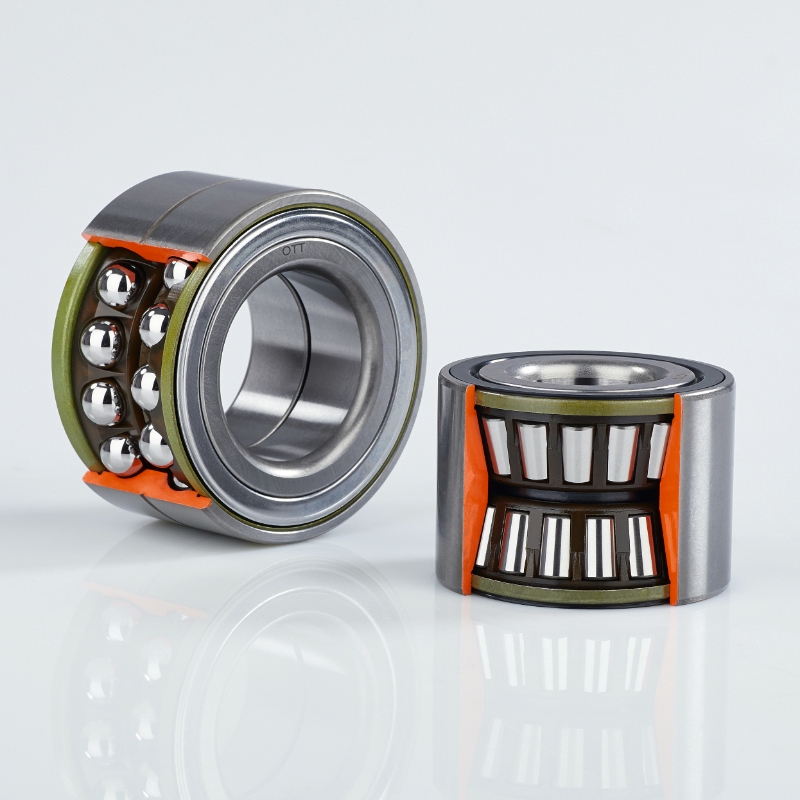
Wheel bearing (technically): The rolling element assembly itself — the inner and outer races, ball or roller elements, cage, and seals. This is the precision component that allows the wheel to rotate while carrying the vehicle's weight.
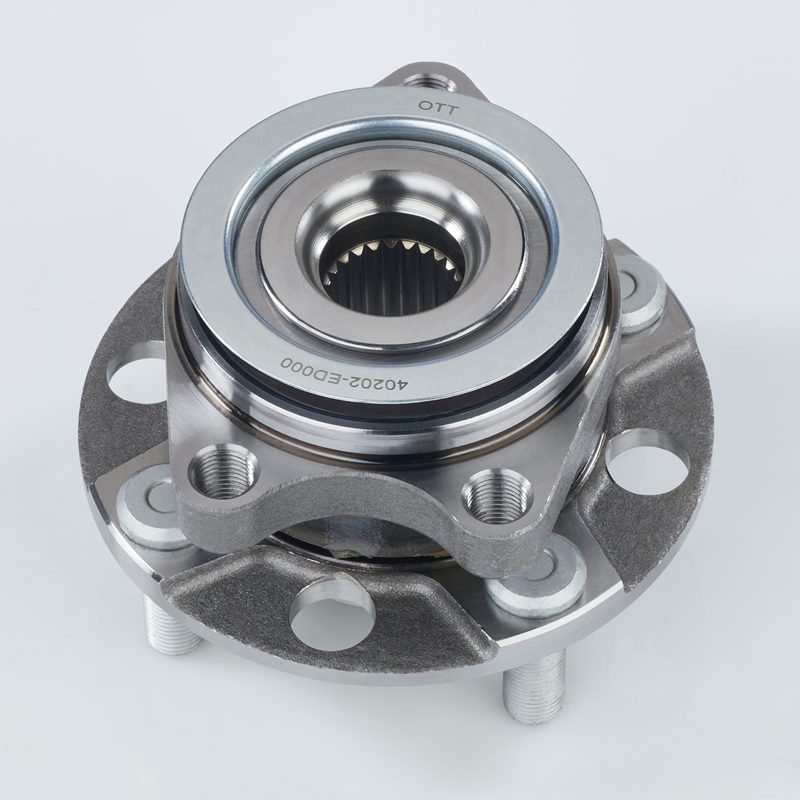
Hub bearing unit (also called hub assembly or wheel hub bearing): A complete, pre-assembled unit that integrates multiple components into a single sealed module:
- The bearing (rolling elements + races)
- The hub flange (the face where the wheel bolts to)
- ABS reluctor ring (for wheel speed sensing)
- Seals and sometimes the outer knuckle mounting flange
In everyday language, people use both terms to mean the same thing. When a mechanic says "you need a new wheel bearing," they usually mean the entire hub bearing unit.
Three Generations of Wheel Hub Design
Understanding the terminology is clearest when you look at the evolution of hub bearing design:
Generation 1 — Loose Tapered Roller Bearings
The traditional design used on most vehicles through the 1980s and still found on some trucks and rear axles:
- Two separate tapered roller bearings in the hub
- Requires periodic inspection and grease repacking
- Pre-load (bearing tightness) must be adjusted during installation
- Can be purchased as loose bearings — inner bearing, outer bearing, grease seals sold separately
- Lower parts cost, but higher skill requirement for installation
This is what most people originally meant by "wheel bearing" in the traditional service sense.
Generation 2 — Double-Row Angular Contact Unit Bearing
An improvement that packages both bearings into a single unit while keeping the hub separate:
- A double-row bearing unit (flanged outer ring) bolts to the steering knuckle
- The hub still presses onto the bearing inner ring
- Sealed, maintenance-free
- When worn, the bearing unit can be replaced while the hub is reused (if undamaged)
- Common on European vehicles in the 1990s–2000s
Here, "wheel bearing" means the unit bearing, while the hub is a separate component.
Generation 3 — Integrated Hub Bearing Unit
The dominant design on modern passenger vehicles:
- Bearing, hub flange, ABS reluctor ring, and seals are all integrated into one sealed assembly
- Bolts directly to the steering knuckle — no pressing required
- Cannot be disassembled — replaced as a complete unit
- When people say "hub bearing" today, this is usually what they mean
Which Term to Use When Searching for Parts
This is where the confusion causes practical problems:
If your vehicle has a Generation 3 hub unit (most modern cars): Search for "wheel hub bearing assembly," "hub bearing unit," or "front/rear wheel bearing hub." You'll receive the complete integrated assembly.
If your vehicle has an older press-fit bearing (some older vehicles, some rear axles): Search for "wheel bearing" — you may find just the loose bearing that needs to be pressed in.
If your vehicle has adjustable tapered roller bearings (older trucks, some commercial vehicles): Search for "wheel bearing kit" — you'll get inner bearing, outer bearing, grease seals, and sometimes a new spindle nut.
When in doubt, use your vehicle's VIN or specific year/make/model/position to look up the correct part.
Diagnosing Hub Bearing vs Wheel Bearing Problems
Since the failure symptoms are the same regardless of which generation you have:
Sound: Grinding, humming, or rumbling that changes with speed. May intensify on turns.
Feel: Vibration through the steering wheel (front bearings) or body (rear bearings).
Play: Lift the wheel and rock it — any detectable movement indicates bearing wear.
Spin test: With the wheel lifted, spin it by hand. Roughness, notchiness, or noise confirms a worn bearing.
Replacement Considerations
| Design | DIY Difficulty | Typical Parts Cost | Special Tools? |
|---|---|---|---|
| Gen 3 hub unit | Moderate | $80–300 | Hub nut socket, torque wrench |
| Gen 2 unit bearing | Moderate–Hard | $50–150 + hub | Hydraulic press, sometimes |
| Gen 1 tapered (adjustable) | Hard | $30–100 | Proper pre-load adjustment required |
| Press-fit loose bearing | Hard | $20–80 | Hydraulic press required |
For Generation 3 hub units, replacement is genuinely within reach of a mechanically inclined DIYer with the right tools. For press-fit or adjustable bearing designs, the specialized tools required often make shop service more practical.
OTT Bearing: Hub Units and Loose Bearings
OTT manufactures both:
Hub bearing units (Generation 2 and 3): Pre-assembled, sealed, ABS sensor-compatible. Available with OEM cross-references for common vehicle platforms. IATF 16949 certified, Z3V3 noise-graded.
Tapered roller bearings: For older vehicle platforms, commercial vehicles, and trailer applications. Available in matched cup-and-cone sets.
For distributors: we provide complete cross-reference documentation linking OEM part numbers to our SKUs, simplifying catalog management and customer service.