Wheel bearings are among the most safety-critical components on any vehicle. A failing wheel bearing can lead to wheel lockup, loss of steering control, and catastrophic wheel separation at highway speeds. Knowing the warning signs early can prevent a dangerous — and expensive — failure.
Sign 1: Humming or Growling Noise
The most common early symptom of a bad wheel bearing is a humming, growling, or rumbling noise that increases with vehicle speed. This noise is caused by damaged rolling elements or rough bearing races creating friction as they rotate.
Key characteristics of wheel bearing noise: it gets louder as you go faster (typically noticeable above 30 mph), it often changes when turning — gets louder when turning one direction and quieter when turning the other (this helps identify which side is failing), and it sounds like it's coming from the wheels rather than the engine bay.
To perform a simple diagnostic: drive on a smooth, quiet road at 40-50 mph. Gently swerve left, then right. If the noise gets louder when you turn left, the right-side bearing is likely failing (because turning left loads the right wheel more). The opposite applies for right turns.
Sign 2: Vibration Through the Steering Wheel
A worn wheel bearing allows the wheel hub to develop play, which causes vibration that you can feel through the steering wheel (for front bearings) or through the seat and floorboard (for rear bearings).
This vibration typically increases with speed and may feel similar to driving on a rough road — even when the road surface is smooth. It's different from tire balance vibration, which tends to occur at specific speeds. Bearing vibration is more constant and progressively worsens.
Sign 3: Steering Pull or Wandering
When a wheel bearing wears unevenly, it can cause the vehicle to pull slightly to one side during braking or straight-line driving. This happens because the worn bearing allows the wheel to sit at a slightly incorrect angle, affecting alignment.
If your vehicle feels like it's "wandering" on the highway or requires constant steering corrections, a worn wheel bearing could be the cause — though you should also check tire pressure, alignment, and suspension components.
Sign 4: Uneven Tire Wear
A severely worn wheel bearing allows enough wheel movement to change the contact patch between tire and road. This causes irregular wear patterns on the affected tire — typically showing more wear on one edge than the other.
If you notice uneven tire wear that persists even after an alignment, inspect the wheel bearings. Grab the top and bottom of the tire and rock it — any noticeable play indicates bearing wear.
Sign 5: ABS Warning Light
Modern wheel hub bearings often include an integrated ABS sensor ring (tone ring). When the bearing wears enough to allow play in the hub, the ABS sensor can no longer read the tone ring accurately. This triggers the ABS warning light on your dashboard.
An ABS light combined with any of the above symptoms is a strong indicator of wheel bearing failure. Don't ignore it — the ABS system may not function correctly until the bearing is replaced.
How Long Do Wheel Bearings Last?
Modern sealed wheel hub bearings are designed for 100,000-150,000 miles under normal driving conditions. However, several factors can significantly shorten bearing life: driving on rough or unpaved roads, hitting potholes or curbs, driving through deep water, and carrying heavy loads or towing frequently.
Vehicles used for towing or heavy hauling may need wheel bearing replacement as early as 60,000-80,000 miles. Trailer bearings face even harsher conditions and may need more frequent inspection.
DAC Bearing Structure
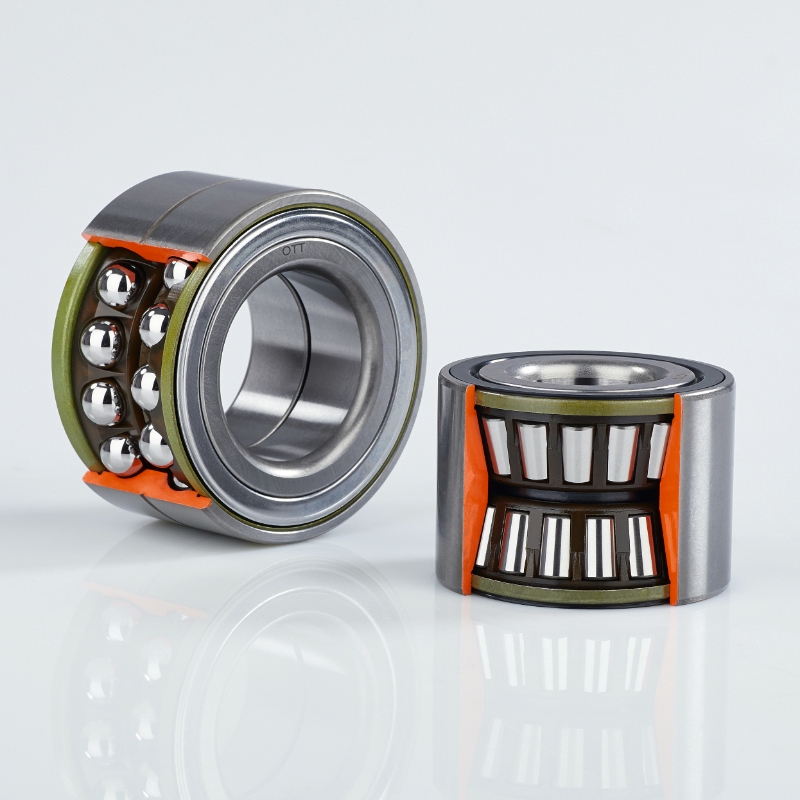
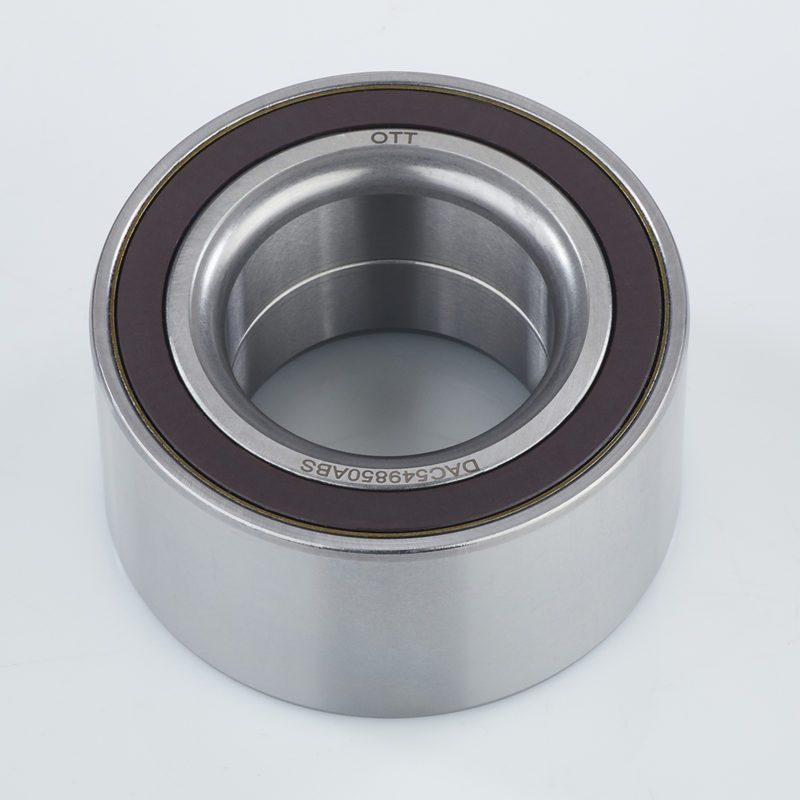
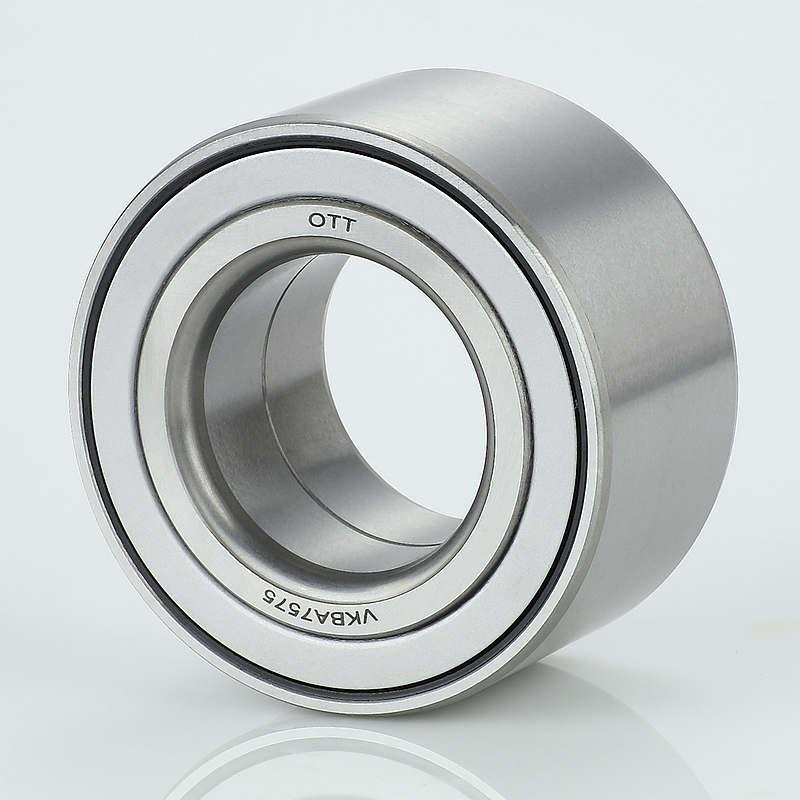
Most modern passenger vehicles use DAC (Double-row Angular Contact) wheel hub bearings. These pre-sealed, pre-lubricated units are designed for zero-maintenance operation throughout their service life.
The double-row design handles both radial loads (vehicle weight) and axial loads (cornering forces) simultaneously, which is why DAC bearings replaced older tapered roller designs in most passenger car applications. They're available in sizes from 25mm to 80mm inner diameter, covering virtually every passenger car and light truck on the road.
FAQ
Q: Can I drive with a bad wheel bearing?
For a short distance at low speed to reach a repair shop — possibly. But driving with a severely worn wheel bearing is dangerous. The bearing can seize, locking the wheel, or it can fail completely, allowing the wheel to separate from the vehicle. If you hear grinding or feel significant vibration, get it inspected immediately.
Q: How much does wheel bearing replacement cost?
For most passenger vehicles, expect $150-$400 per wheel including parts and labor. The bearing unit itself (a sealed hub assembly) typically costs $50-$150 depending on the vehicle. Labor is usually 1-2 hours per side.
Q: Should I replace wheel bearings in pairs?
While it's not strictly necessary to replace both sides simultaneously, many mechanics recommend it — especially if both bearings have similar mileage. If one has worn out, the other is likely close behind.
---
OTT Bearing manufactures over 200 models of DAC wheel hub bearings covering 40+ vehicle brands. Our proprietary Carbonitriding (C-A) heat treatment improves bearing lifespan by 5-10x compared to conventional processing. View our wheel hub bearing catalog or request a quote with your vehicle application.