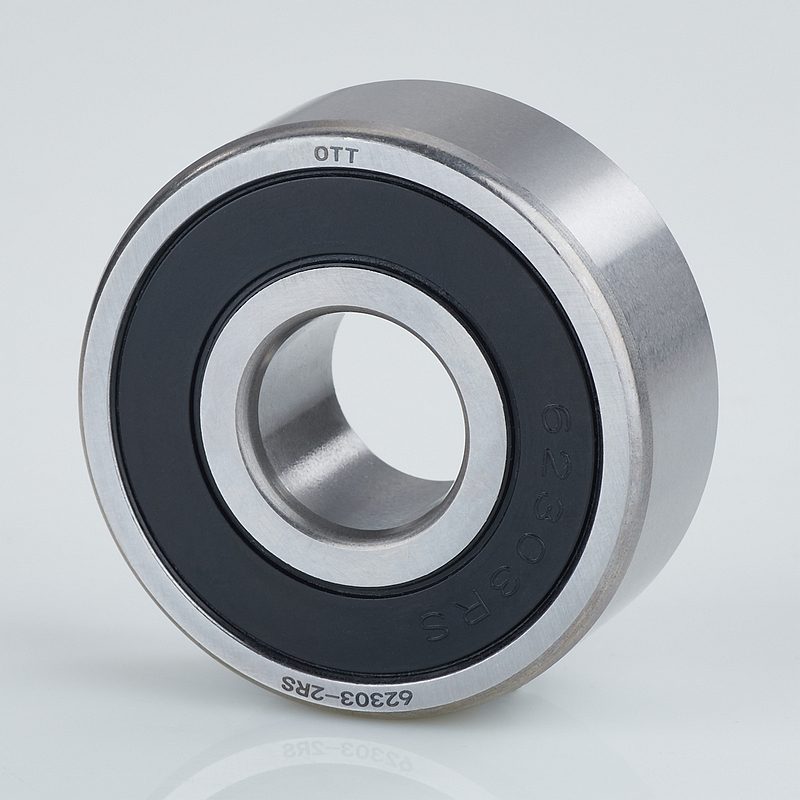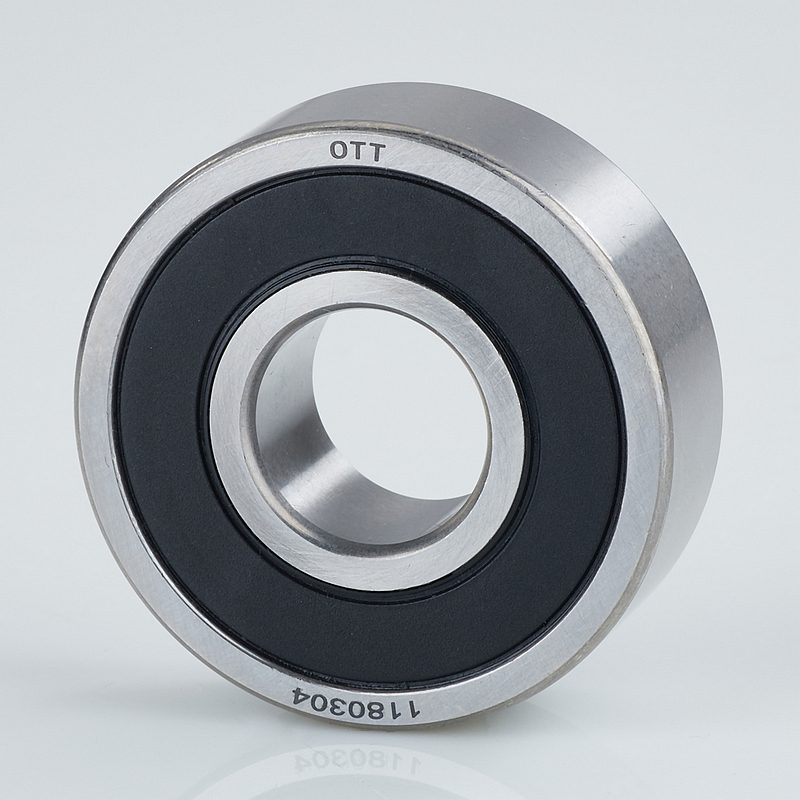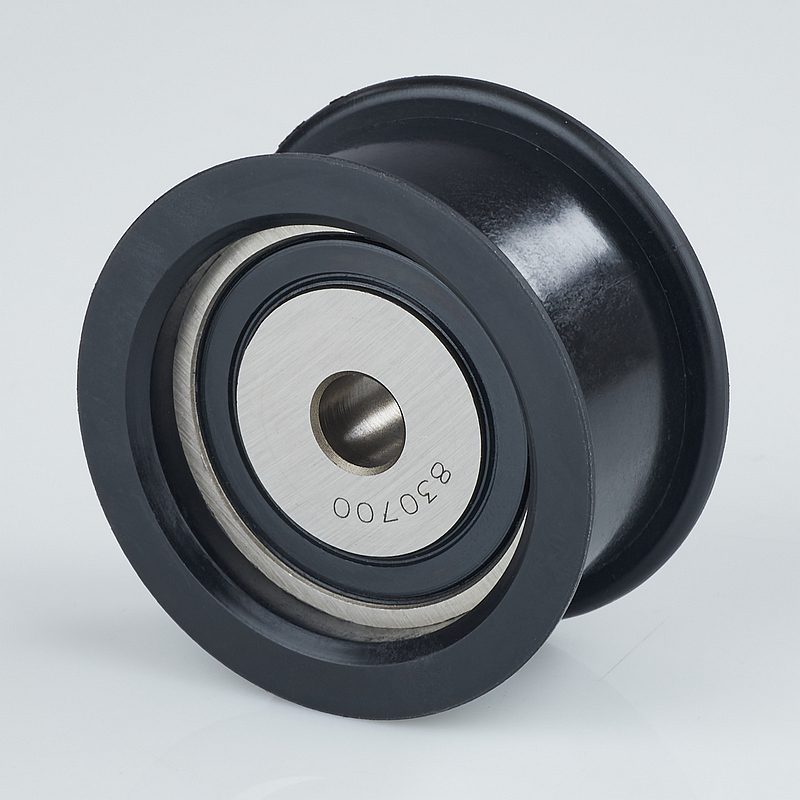
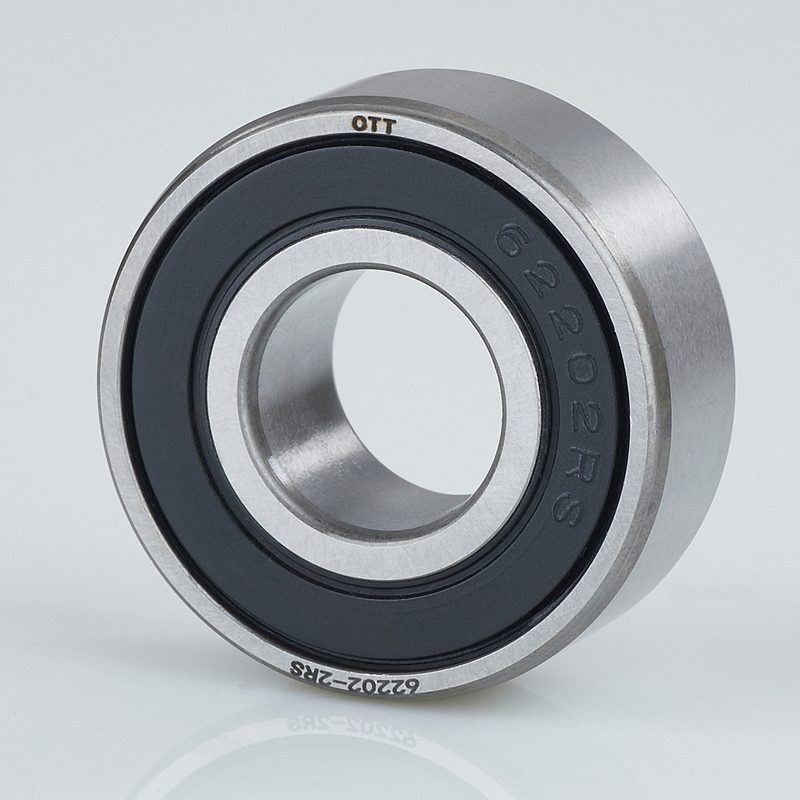
Alternator and pulley bearings are among the highest-volume consumables in the automotive aftermarket. Every vehicle on the road has at least one alternator bearing, and overrunning alternator pulleys on modern engines add a second bearing per vehicle. For distributors building aftermarket inventory and for automotive component manufacturers sourcing OEM-equivalent supply, finding a reliable wholesale source matters — the difference between a Z3V3-grade factory-direct bearing and a grey-market commodity part can be the difference between a six-month and six-year product life.
This guide covers what to look for when sourcing car alternator and pulley bearings at wholesale, how the cross-reference process works, what certifications matter, and what pricing and MOQ structure to expect from a direct factory.
Why Alternator Bearings Are a High-Value Sourcing Category
The global automotive alternator bearing market is driven by several compounding factors:
High replacement frequency: Alternator bearings typically last 80,000–120,000 miles under normal conditions, but city driving cycles, belt tension issues, and contamination can reduce this to 40,000–60,000 miles. In high-mileage vehicle populations (Southeast Asia, Eastern Europe, Latin America, Middle East), alternator bearing replacement is a routine maintenance item.
Multiple bearings per vehicle: A standard alternator uses two bearings (front and rear rotor bearings). Vehicles with overrunning alternator pulley (OAP) or overrunning alternator decoupler (OAD) systems add a third bearing inside the pulley assembly. Fleet operators and workshop supply distributors need all three SKUs.
Cross-application volume: Unlike wheel hub bearings (which are vehicle-specific), alternator bearings are dimensionally standardized across hundreds of vehicle models. A single SKU like a 6203-2RS-Z3V3 bearing fits alternators on dozens of different vehicles from Toyota, Hyundai, Ford, and VW. This makes inventory management efficient and allows distributors to achieve high turns.
Key Specifications: What the Numbers Mean
When sourcing alternator bearings, the following specifications directly determine product quality and application suitability:
Bearing Series and Dimensions
Alternator bearings are almost exclusively deep groove ball bearings (DGBB) in the 62xx and 63xx series:
| Bearing | Bore (d) | OD (D) | Width (B) | Typical Application |
|---|---|---|---|---|
| 6203-2RS | 17 mm | 40 mm | 12 mm | Common front rotor bearing |
| 6204-2RS | 20 mm | 47 mm | 14 mm | Medium alternator front bearing |
| 6303-2RS | 17 mm | 47 mm | 14 mm | Heavy-duty front bearing |
| 6304-2RS | 20 mm | 52 mm | 15 mm | Truck alternator bearing |
| 6202-2RS | 15 mm | 35 mm | 11 mm | Compact alternator rear bearing |
| B17-99D | 17 mm | 47 mm | 15.5 mm | Specialized OEM (Honda/Denso) |
The "-2RS" suffix indicates rubber seals on both sides — required for all automotive alternator applications to prevent grease loss and contamination ingress.
Noise and Vibration Grade
The noise grade (Z1–Z5, V1–V5) is the single most important quality indicator for alternator bearings. Higher numbers mean quieter, smoother bearings.
| Grade | Vibration Class | Application |
|---|---|---|
| Z1V1 | Standard | General industrial — NOT suitable for alternators |
| Z2V2 | Low noise | Power tools, HVAC motors — marginal for automotive |
| Z3V3 | Extra low noise | Minimum for automotive alternators |
| Z4V4 | Ultra-low noise | Premium aftermarket, OEM-spec |
| Z5V5 | Super low noise | Precision OEM, highest-tier applications |
Always specify Z3V3 minimum when ordering automotive alternator bearings. Suppliers who cannot confirm noise grade in their quality documentation are likely supplying Z1V1 or ungraded stock.
Endurance Testing
OEM-grade alternator bearings are endurance-tested to simulate full vehicle life. NACHI, SKF, and NSK published data points to 1,000–1,500 hour endurance at rated speed and temperature. OTT Bearing conducts 1,004-hour endurance tests under ISO 281 conditions before releasing bearing grades for automotive programs.
Cross-Reference Guide: OEM Application Mapping
The practical value of a good wholesale supplier is cross-reference depth — knowing which bearing fits which alternator model, and having enough SKU coverage to supply the dominant vehicle fleet in your market.
Common OEM Brand Mapping
| OEM Application | Alternator Brand | Front Bearing | Rear Bearing |
|---|---|---|---|
| Toyota Corolla (1ZZ-FE) | Denso 104210-3600 | 6203-2RS Z3V3 | 6202-2RS Z3V3 |
| VW Golf (1.4 TSI) | Bosch 0124415072 | 6304-2RS Z3V3 | 6203-2RS Z3V3 |
| Ford Focus (2.0L) | Motorcraft GL-8629 | 6203-2RS Z3V3 | 6202-2RS Z3V3 |
| Hyundai Elantra (G4FC) | Hyundai 37300-2B000 | 6303-2RS Z4V4 | 6203-2RS Z3V3 |
| GM Cruze (A14NET) | Delco 22822976 | 6204-2RS Z3V3 | 6203-2RS Z3V3 |
| Mitsubishi Outlander | Mitsubishi A3T09291 | 6303-2RS Z3V3 | 6203-2RS Z3V3 |
For a complete cross-reference covering 200+ alternator models, OTT provides a downloadable cross-reference Excel file upon request.
How to Evaluate a Wholesale Alternator Bearing Supplier
1. IATF 16949 Certification — Non-Negotiable
For any automotive application, IATF 16949 (the automotive quality management standard) is the baseline. A factory with IATF 16949 has documented control plans for every production step, statistical process control on critical dimensions, and traceability from raw material to finished product. This matters because a bearing failure in an alternator causes vehicle breakdowns — liability follows the supply chain.
Verify the certificate: IATF certificates are issued by accredited bodies (SGS, TÜV Rheinland, Bureau Veritas) and are publicly checkable. Never accept an unverifiable photocopy.
2. Noise Grade Verification — Ask for Data, Not Claims
A reliable supplier will provide vibration test data (acceleration values in mm/s² for radial vibration at three frequency bands) from their in-process QC, not just a printed Z3V3 label. Request a sample inspection report. If they cannot produce one, the noise grade claim is unverifiable.
3. Grease Specification — High-Temperature vs Standard
Alternator bearings operate at 80–120°C continuously, with peak temperatures up to 150°C. Standard greases (dropping point ~180°C) degrade under these conditions. Specify lithium complex or polyurea grease with a dropping point above 260°C and an operating range to 150°C. Ask the supplier for their grease material safety data sheet (MSDS) or grease specification document.
4. Packaging and Labeling Capabilities
B2B wholesale buyers typically need one of three packaging options:
- Bulk / industrial pack: Polyethylene bag in carton, no retail packaging, lowest cost
- White box / private label: Your brand printed on box, suitable for workshop supply
- Full retail blister: For branded aftermarket distribution (higher MOQ required)
Confirm the supplier can handle your required format and that they have printing equipment for custom labeling — not all factories do.
5. MOQ Flexibility and Sample Policy
Factory MOQs typically run 500–1,000 pieces per SKU. For distributors building initial inventory, negotiate:
- Sample policy: 10–50 pieces at production cost before commitment
- Mixed-SKU minimum: e.g., 3,000 pcs total across 6 SKUs rather than 500 per SKU
- Stocking program: Some factories offer consignment stock or priority allocation for established buyers
Pricing Structure: What to Expect FOB
Alternator bearing pricing depends on grade, quantity, and specification:
| Tier | Volume | Price Range (FOB Ningbo) | Grade |
|---|---|---|---|
| Sample | 10–50 pcs | At cost + handling | Z3V3 |
| Small order | 500–2,000 pcs | $0.45–$0.90/pc | Z3V3 |
| Mid volume | 2,000–10,000 pcs | $0.32–$0.60/pc | Z3V3 |
| High volume | 10,000+ pcs | $0.22–$0.40/pc | Z3V3–Z4V4 |
These are indicative FOB Ningbo prices for standard 62xx/63xx series bearings. Specialized OEM-spec parts (flanged designs, custom seals) carry a 20–40% premium. Prices quoted in USD; most Chinese factories accept T/T 30% deposit with balance against B/L.
Sourcing from OTT Bearing
OTT Bearing is an IATF 16949 certified automotive bearing manufacturer in Jiashan, Zhejiang, China, specializing in alternator, starter, tensioner, idler, and wheel hub bearings for the global aftermarket. Our alternator bearing program covers 60+ SKUs with cross-reference to Bosch, Hitachi, Denso, Mitsubishi, Valeo, and Motorcraft alternator models.
Key specs:
- Noise grade: Z3V3 standard; Z4V4 available on request
- Endurance rating: 1,004 hours at rated speed (ISO 281)
- Grease: High-temperature polyurea grease (150°C operating, 260°C drop point)
- Seal: Dual rubber contact seals (2RS)
- MOQ: 1,000 pcs per SKU
- Lead time: 15–25 days from order confirmation
- Packaging: Bulk, white box, or private label available
Related Resources
- Alternator Bearing Replacement Guide — dimensions, symptoms and replacement steps
- Alternator Bearing Noise Diagnosis — identify and diagnose bearing noise
- Tensioner Bearing Manufacturer Guide — same sourcing framework for tensioner bearings
- OTT Alternator & Starter Bearing Catalog — full SKU list with cross-references