A failing alternator bearing announces itself with a whining or grinding noise that rises and falls with engine RPM. Left unchecked, the bearing will seize — locking the pulley, shredding the drive belt, and potentially damaging the alternator windings beyond repair. Replacing the bearing early saves the alternator and costs a fraction of a full unit replacement. This guide covers alternator bearing sizes, failure symptoms, selection criteria, and quality factors — written from the perspective of a manufacturer that supplies alternator bearings to OEM factories worldwide.
Quick Answer: Common Alternator Bearing Sizes
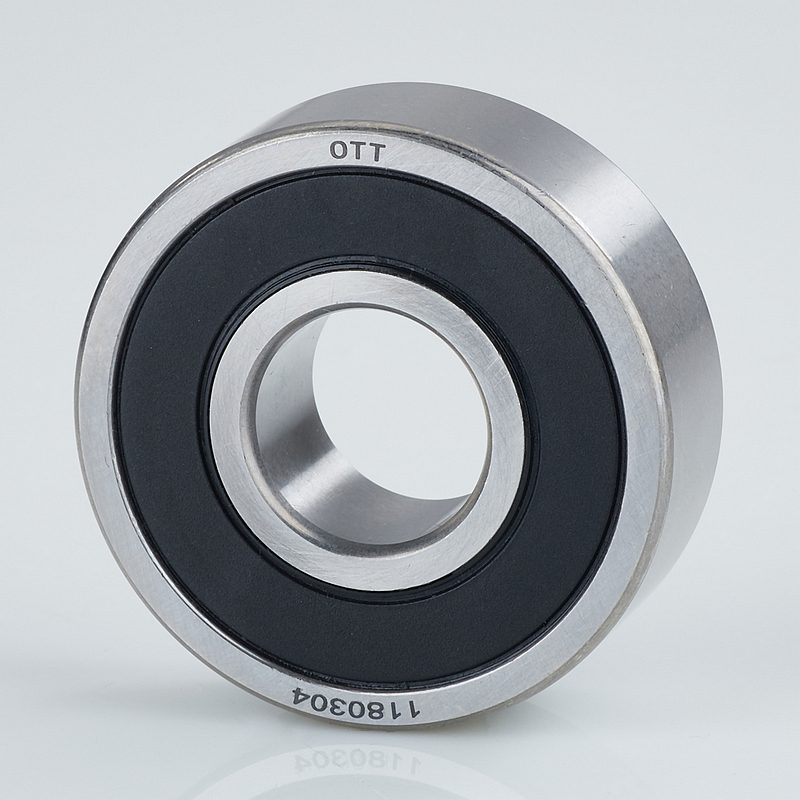
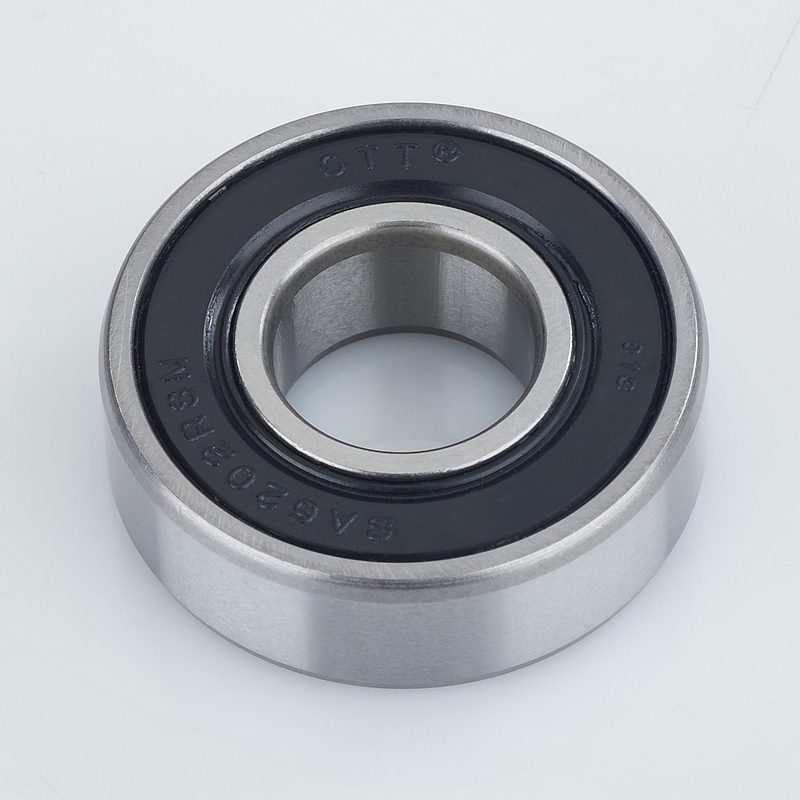
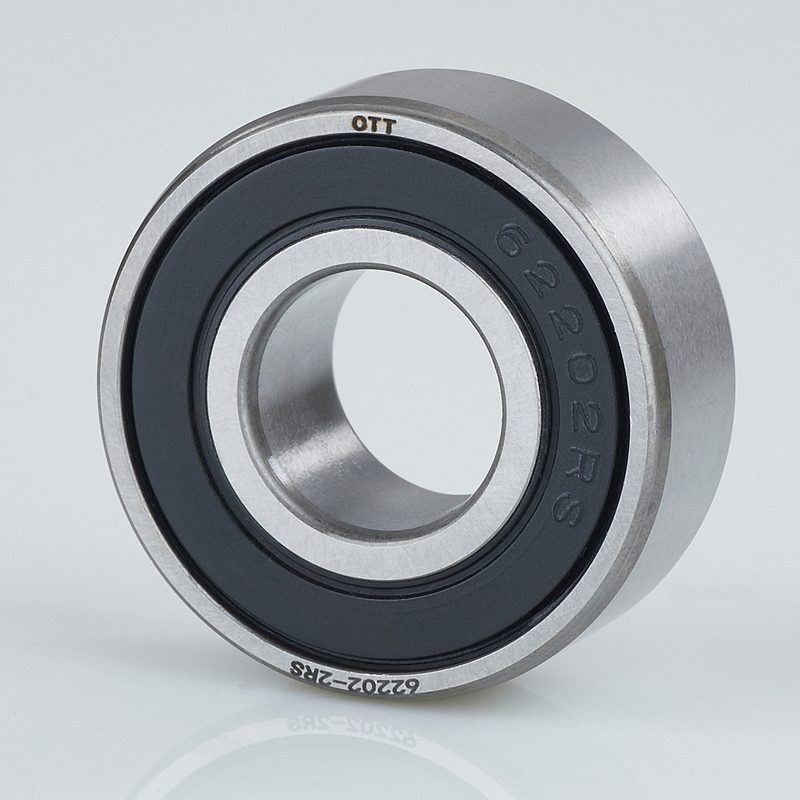
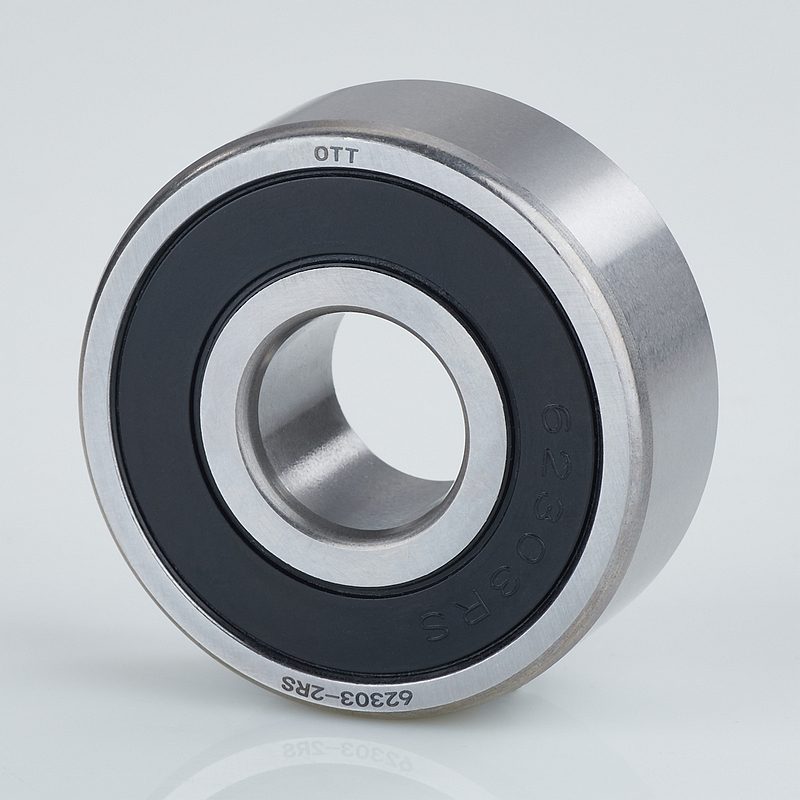
Most automotive alternators use two deep groove ball bearings — a larger one at the drive end (front) and a smaller one at the slip-ring end (rear). The most common sizes are:
- Front (drive end): 6303-2RS (17x47x14mm) or 6202-2RS (15x35x11mm)
- Rear (slip-ring end): 6201-2RS (12x32x10mm) or 6001-2RS (12x28x8mm)
- Heavy-duty applications: 6304-2RS (20x52x15mm)
- Miniature applications: 608-2RS (8x22x7mm)
The numbers printed on the old bearing are the fastest way to find the correct replacement. If the markings are worn, measure the bore diameter, outer diameter, and width with calipers.
Alternator Bearing Size Chart with OEM Cross-Reference
| Model | Dimensions (d x D x B) | Speed Rating (Grease) | Fits Alternators |
|---|---|---|---|
| 6201-2RS | 12 x 32 x 10 mm | 14,000 rpm | European, Japanese, American (rear) |
| 6202-2RS | 15 x 35 x 11 mm | 20,000 rpm | Universal front bearing |
| 6203-2RS | 17 x 40 x 12 mm | 14,000 rpm | Bosch, Hitachi, Mitsubishi (front) |
| 6303-2RS | 17 x 47 x 14 mm | 9,500 rpm | Bosch, Nippondenso (front) |
| 6304-2RS | 20 x 52 x 15 mm | 8,500 rpm | CAV, Lucas, heavy-duty |
| 6001-2RS | 12 x 28 x 8 mm | 16,000 rpm | Bosch, Nippondenso starters |
| B15-69D | 15 x 35 x 13 mm | — | Acura, Honda, Toyota, Chevrolet |
| 608-2RS | 8 x 22 x 7 mm | 26,000 rpm | Miniature alternators, small motors |
View the full OTT alternator bearing catalog with detailed specs: Alternator & Starter Bearings
How Alternator Bearings Fail: 5 Symptoms
Catching a failing alternator bearing early prevents costly cascading damage. Here are the warning signs, ranked from earliest to latest:
1. Whining Noise at Idle
The earliest symptom is a faint, high-pitched whine audible with the hood open at idle. The pitch increases with engine RPM because the alternator pulley spins 2.5-3x faster than the crankshaft. A healthy bearing is virtually silent — any audible noise from the alternator means the bearing surfaces are deteriorating.
2. Grinding or Growling Under Load
As the bearing degrades, the whine turns into a grinding or growling sound, especially when electrical loads are high (headlights, A/C, heated seats all on). The increased magnetic resistance from the charging load puts more radial force on the bearings, amplifying the noise from damaged raceways.
3. Belt Squeal That Won't Go Away
A worn bearing allows the pulley to develop a slight wobble — even 0.1mm of misalignment causes the belt to track unevenly and squeal. If you have replaced the belt and tensioner but the squeal persists, the alternator bearing is likely the root cause. Check for play by trying to rock the pulley by hand with the belt removed.
4. Intermittent Charging Faults
A severely worn bearing can cause the rotor to shift position inside the stator, creating intermittent contact between rotating and stationary components. This manifests as a flickering battery light, erratic voltage output (should be steady at 13.8-14.4V), or the charging system cutting in and out.
5. Alternator Seizes
The final stage — the bearing locks up, the pulley stops spinning, and the drive belt either snaps or burns through. At this point, the alternator is likely damaged beyond simple bearing replacement due to heat and mechanical damage to the windings.
What Makes an Alternator Bearing Different From a Standard Bearing?
Not all deep groove ball bearings are suitable for alternator use. Here is what a quality alternator bearing requires:
Ultra-Low Noise (Z3V3 Grade)
Alternator bearings must meet Z3V3 vibration grade — the tightest standard for automotive applications. This is achieved through precision grinding of the raceways (surface roughness below Ra 0.05 micrometers) and using G10-grade steel balls. Standard P0-grade bearings are far too noisy for alternator use and will produce an audible whine immediately after installation.
High-Speed Capability
Alternator pulleys typically spin at 6,000-18,000 RPM (2.5-3x engine speed due to the pulley ratio). The bearing must be rated for this speed range while maintaining low friction and minimal heat generation. OTT alternator bearings use speed-rated grease formulations and precision cage designs (nylon or brass retainers) that prevent ball skidding at high RPM.
Temperature Resistance
Engine bay temperatures routinely reach 120-150°C near the alternator, and the bearing itself generates additional heat through friction. OTT alternator bearings use grease rated for continuous operation at -40°C to +150°C, and our seals maintain their elasticity across this entire range. Cold-start capability down to -60°C has been verified through endurance testing with a Russian OEM partner.
100% Vibration Testing
Every OTT alternator bearing undergoes vibration testing before shipment. Bearings that exceed the Z3V3 vibration threshold are rejected — regardless of whether they pass all dimensional checks. This is a critical quality step that commodity bearing suppliers often skip to reduce costs.
OTT Endurance Testing: 1,004 Hours of Continuous Operation
OTT alternator bearings were subjected to a rigorous 1,004-hour continuous endurance test conducted by a Russian OEM partner. This test is equivalent to over 41 days of non-stop alternator operation — far exceeding the industry-standard 500-hour requirement.
During the test, both bearing models maintained consistent noise and vibration levels throughout the entire 1,004-hour period, with no increase in temperature or change in running accuracy. This result validates OTT's Carbonitriding (C-A) heat treatment technology, which improves bearing fatigue life by 5-10x compared to conventional heat treatment.
How to Replace an Alternator Bearing: Key Technical Points
While the full mechanical procedure varies by alternator model, here are the critical technical points that determine whether the replacement will be successful and long-lasting:
Bearing Removal
Use a proper bearing puller or arbor press — never hammer directly on the bearing or housing. Aluminum alternator housings are brittle and will crack under impact. The front bearing is typically press-fit into the front housing, while the rear bearing sits in the rear housing with a retaining plate.
Bearing Installation
Press the new bearing in using a tube or socket that contacts only the outer race — never press on the inner race or the balls, as this will damage the new bearing before it even runs. Press until the bearing is flush with the housing bore. Over-pressing can crack the housing.
Critical Dimension Check
Before installing the new bearing, verify three dimensions with calipers:
- Bore diameter matches the shaft (should be a light interference fit)
- Outer diameter matches the housing (press fit, typically 0.01-0.02mm interference)
- Width does not exceed the housing depth
Grease Compatibility
If the old bearing leaked grease into the housing, clean the bore thoroughly before installing the new bearing. Mixing different grease types (especially lithium-based with polyurea-based) can cause the grease to soften and leak out of the new bearing.
Alternator Bearing Cost Comparison
| Option | Parts Cost | Labor Cost | Total | Notes |
|---|---|---|---|---|
| Replace bearings only | $5-$45 | $50-$100 | $55-$145 | Best value if windings are good |
| Remanufactured alternator | $100-$300 | $80-$150 | $180-$450 | Quality varies by remanufacturer |
| New OEM alternator | $200-$600 | $80-$150 | $280-$750 | Highest cost, best warranty |
For aftermarket shops and remanufacturers processing alternators in volume, sourcing quality bearings at the right price directly impacts profitability. OTT supplies alternator bearings to remanufacturing operations worldwide at factory-direct pricing — contact us for volume quotes.
How to Choose the Right Alternator Bearing
Step 1: Read the old bearing markings
The fastest approach. Look for the model number stamped on the bearing side face (e.g., 6303-2RS, 6202-ZZ). If readable, order the exact same model.
Step 2: Measure if markings are worn
Use calipers to measure bore (d), outer diameter (D), and width (B) to the nearest 0.1mm. Match these dimensions to the size chart above.
Step 3: Specify the seal type
For most alternator applications, 2RS (rubber sealed) is the correct choice — it keeps engine bay contaminants out. ZZ (metal shielded) is acceptable for clean environments. Never use open bearings in alternators.
Step 4: Demand low-noise grade
Insist on Z3V3 vibration grade or equivalent. Standard-grade bearings will produce an immediate whine that customers will complain about, leading to warranty returns.
Step 5: Buy from a manufacturer or authorized source
Generic marketplace bearings with unknown origin are the leading cause of premature alternator bearing failure. A quality bearing from a manufacturer like OTT costs only marginally more than a no-name bearing but lasts significantly longer.
OEM Alternator Bearing Cross-Reference by Brand
If you're sourcing replacement bearings for a specific alternator brand, here is a reference by manufacturer. Note that actual sizes vary by alternator model — always verify against the physical bearing before ordering in bulk.
| Alternator Brand | Common Series | Typical Front Bearing | Typical Rear Bearing | OTT Model |
|---|---|---|---|---|
| Bosch | NC, NI, F000AL | 6303-2RS | 6201-2RS | B17-99D / 6303-2RS |
| Denso (Nippondenso) | 104210, SC series | 6202-2RS | 6001-2RS | ECB12-85D / 6202 |
| Hitachi | LR, LRB series | 6203-2RS | 6201-2RS | 6203-2RS / B12-85D |
| Mitsubishi | A2T, A3T, A5T | 6303-2RS | 6201-2RS | NPB15-83D / 6303 |
| Valeo | A13, A14, SG series | 6303-2RS | 6201-2RS | 6303-2RS / 6201-2RS |
| Lucas / CAV | A127, A133 | 6304-2RS | 6201-2RS | 6304-2RS / 6201-2RS |
| Delco / ACDelco | CS-series, SI | 6202-2RS | 6000-2RS | B15-69D / 6202 |
For a complete OEM-to-OTT cross-reference with 60+ models, see the OTT Alternator & Starter Bearing Catalog.
Related Resources
- OTT Alternator & Starter Bearing Catalog — wholesale & OEM supply with 60+ models
- 6303 Alternator Bearing — most popular alternator bearing
- 1,004-Hour Endurance Test Results — detailed test report
- Alternator Bearing Noise Diagnosis — identify and fix bearing noise
- Car Engine Bearing Applications — complete engine bearing guide
- Alternator & Starter Bearings — browse our full product range
- Idler Pulley Bearing Guide — another common engine accessory bearing
- Belt Tensioner Bearing Guide — related tensioner bearing replacement
- Denso Alternator Bearing Cross-Reference — OEM part number lookup