The A/C compressor clutch bearing is one of the most specialized bearings in any vehicle. It operates in direct contact with refrigerant, endures thousands of clutch engagement cycles per trip, and must function silently — any noise is immediately audible inside the cabin. When this bearing fails, the result is grinding noise, intermittent cooling, and eventually a seized compressor. This guide covers how A/C compressor clutch bearings work, what makes them different from standard bearings, common failure symptoms, and how to select the right replacement.
How the A/C Compressor Clutch Bearing Works
Unlike most engine bearings that spin continuously, the A/C compressor clutch bearing serves a unique dual role. The clutch pulley spins at all times via the serpentine belt — even when the A/C is off. The compressor shaft only spins when the electromagnetic clutch engages. The bearing sits between these two components, allowing the pulley to spin freely around the compressor shaft when the A/C is off, and locking them together when the A/C is on.
This means the bearing is always working — either spinning freely with the pulley (A/C off) or transmitting compressor load (A/C on). There is no rest state while the engine runs. This continuous operation at speeds of 3,000-6,000 RPM, combined with the harsh chemical environment inside the clutch assembly, makes A/C compressor bearings one of the most demanding bearing applications in any vehicle.
What Makes A/C Compressor Bearings Different?
A/C compressor clutch bearings are fundamentally different from standard deep groove ball bearings. Here is why you cannot substitute a generic bearing:
Double-Row Angular Contact Design
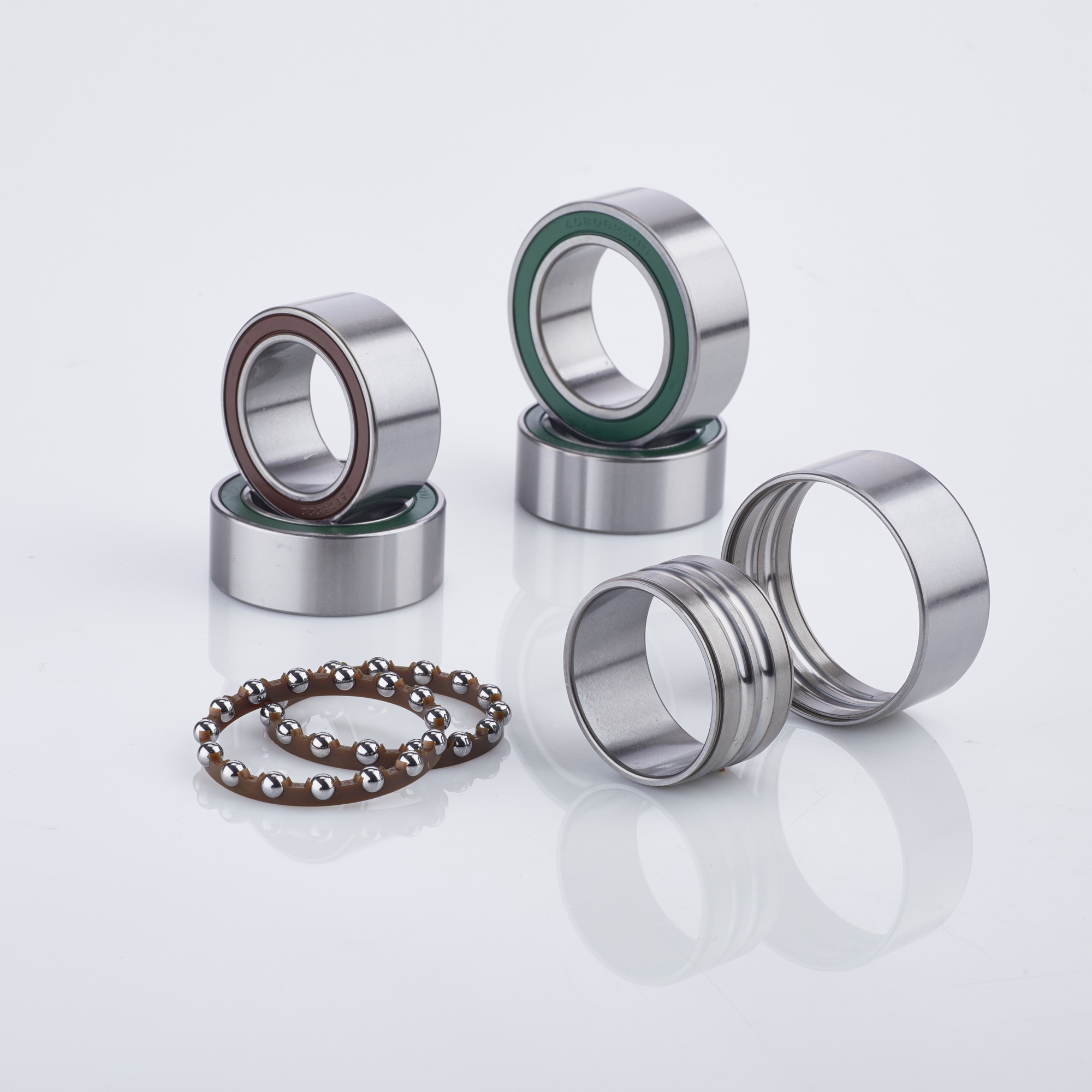
Standard bearings use a single row of balls in a deep groove raceway. A/C compressor bearings use two rows of balls in angular contact raceways — this provides the combined radial and axial load capacity needed to handle clutch engagement forces. The angular contact design also creates a preload that eliminates internal play, preventing the vibration and noise that would be unacceptable in a cabin-facing component.
Chemical-Resistant Seals
The bearing operates in an environment where refrigerant (R-134a, R-1234yf, or R-22 in older systems) and compressor oil can contact the seals. Standard rubber (NBR) seals degrade when exposed to these chemicals. OTT offers three seal material options matched to the application:
| Seal Material | Temperature Range | Chemical Resistance | Best For |
|---|---|---|---|
| NBR (Nitrile) | -40 to 120 degrees C | Good (R-134a compatible) | Standard passenger cars |
| ACM (Acrylic) | -40 to 160 degrees C | Better (broader oil compatibility) | Hot climate, high-output A/C |
| Viton / FKM | -28 to 200 degrees C | Excellent (all refrigerants) | Commercial, bus, premium vehicles |
Refrigerant-Compatible Grease
Standard bearing grease would be washed out by refrigerant exposure. A/C compressor bearings use PAG-compatible synthetic grease that maintains its viscosity and lubricating properties even when in contact with refrigerant and compressor oil.
Vibration Grade: Z2V2
A/C compressor bearings must meet Z2V2 vibration grade — a tighter requirement than the Z3V3 used in many automotive applications. Because the compressor is typically mounted directly to the engine block, any bearing vibration transmits directly through the vehicle structure and into the cabin as noise.
A/C Compressor Bearing Size Chart
| Model | Bore (d) | OD (D) | Width (B) | Weight | Application |
|---|---|---|---|---|---|
| 25BD5010 | 25 mm | 50 mm | 10 mm | 0.05 kg | Mini / compact vehicles |
| 30BD4718 | 30 mm | 47 mm | 18 mm | 0.06 kg | Compact cars |
| 30BD5222 | 30 mm | 52 mm | 22 mm | 0.15 kg | Standard passenger cars |
| 35BD5222 | 35 mm | 52 mm | 22 mm | 0.12 kg | Mid-size vehicles |
| 40BD6224 | 40 mm | 62 mm | 24 mm | 0.20 kg | SUVs, trucks |
| 40BD6830 | 40 mm | 68 mm | 30 mm | 0.38 kg | Commercial / bus A/C |
All OTT A/C compressor bearings are manufactured with ABEC-3 (P6) precision, Z2V2 vibration grade, and 2RS seals (NBR, ACM, or Viton depending on specification). View the complete range: A/C Compressor Bearings
4 Symptoms of a Failing A/C Compressor Clutch Bearing
1. Noise With A/C Off
This is the signature symptom that distinguishes a clutch bearing problem from a compressor problem. Because the clutch pulley spins with the engine at all times (even with A/C off), a bad bearing produces noise regardless of the A/C setting. If the noise only occurs with A/C on, the problem is more likely the compressor internals, not the bearing.
2. Grinding That Gets Worse With A/C On
When the A/C engages, the clutch locks the pulley to the compressor shaft, adding load to the bearing. A bearing with worn raceways will grind louder under this increased load. The noise may also change character — from a light chirp when unloaded to a harsh grind when the A/C compresses refrigerant.
3. Intermittent Cooling
A severely worn bearing can cause the clutch plate to sit at a slight angle, reducing the electromagnetic pull between the clutch plate and the pulley. This causes the clutch to slip intermittently — the A/C blows cold for a while, then warm, then cold again. Many technicians replace the entire compressor for this symptom when the bearing alone is the root cause.
4. Visible Clutch Pulley Wobble
With the engine running, look at the A/C clutch pulley from the front. Any visible wobble indicates a bearing with excessive clearance. The wobble accelerates clutch plate wear and can eventually cause the clutch to disengage permanently.
Replace the Bearing or the Whole Compressor?
This is the key economic decision. Here is when each option makes sense:
Replace the bearing only ($15-$50 parts) when the compressor pumps normally, the clutch coil has good magnetic pull, and the system holds refrigerant charge. This is a bearing press-out and press-in procedure that takes 1-2 hours for an experienced technician.
Replace the clutch assembly ($60-$150 parts) when the clutch plate is scored or worn unevenly, the bearing has caused heat damage to the pulley, or the clutch coil resistance is out of specification. This replaces the pulley, bearing, clutch plate, and coil as a unit.
Replace the entire compressor ($200-$600 parts) when the compressor makes internal noise, does not pump, or has leaked refrigerant (indicating seal failure). At this point, the bearing is a secondary concern.
For A/C repair shops and compressor remanufacturers processing units in volume, sourcing quality clutch bearings at the right price is essential for profitability. OTT supplies A/C compressor clutch bearings from 25mm to 50mm bore with NBR, ACM, or Viton seals — contact us for volume pricing.
Related Resources
- A/C Compressor Bearing Product Page — full OTT catalog with specifications
- Car Engine Bearing Applications — all engine bearing types covered
- Belt Tensioner Bearing Guide — another critical engine bearing
- About OTT Bearing — factory certifications and capabilities