Every car on the road has at least one belt tensioner keeping the serpentine belt tight. Inside every tensioner is a single component that determines whether it runs silently for 100,000 miles or starts squealing at 30,000 — the bearing. This guide explains what bearing is inside a belt tensioner, how it works, why it fails, and what to look for in a quality replacement. Written from the perspective of a bearing manufacturer that supplies tensioner bearings to pulley assembly plants worldwide.
What Is a Belt Tensioner and How Does It Work?
A belt tensioner is a spring-loaded device that maintains constant tension on the serpentine (accessory drive) belt as the engine runs. The serpentine belt drives the alternator, water pump, power steering pump, and A/C compressor — if the belt slips or breaks due to inadequate tension, multiple systems fail simultaneously.
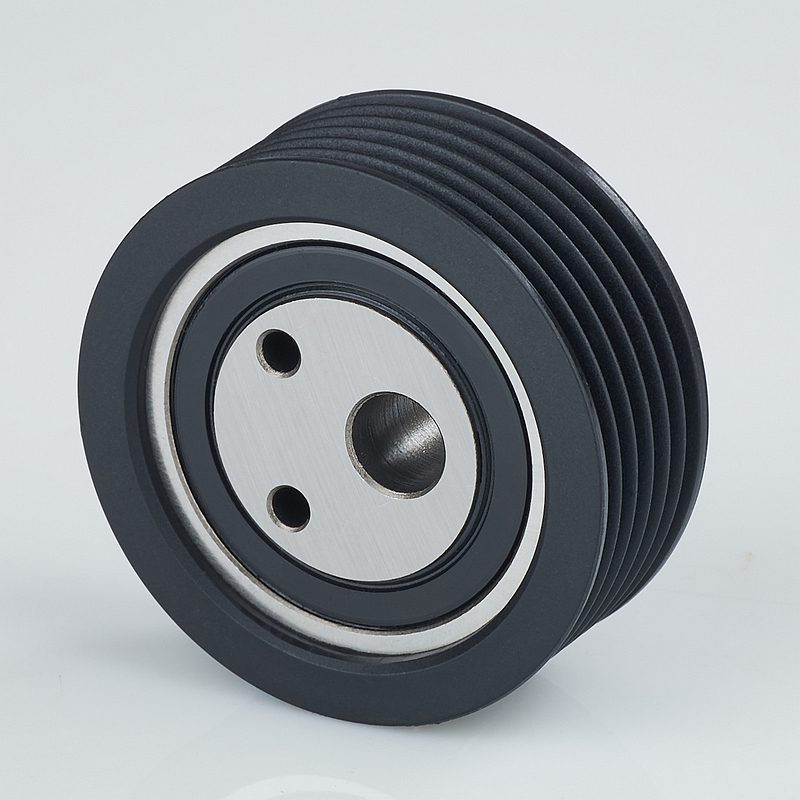
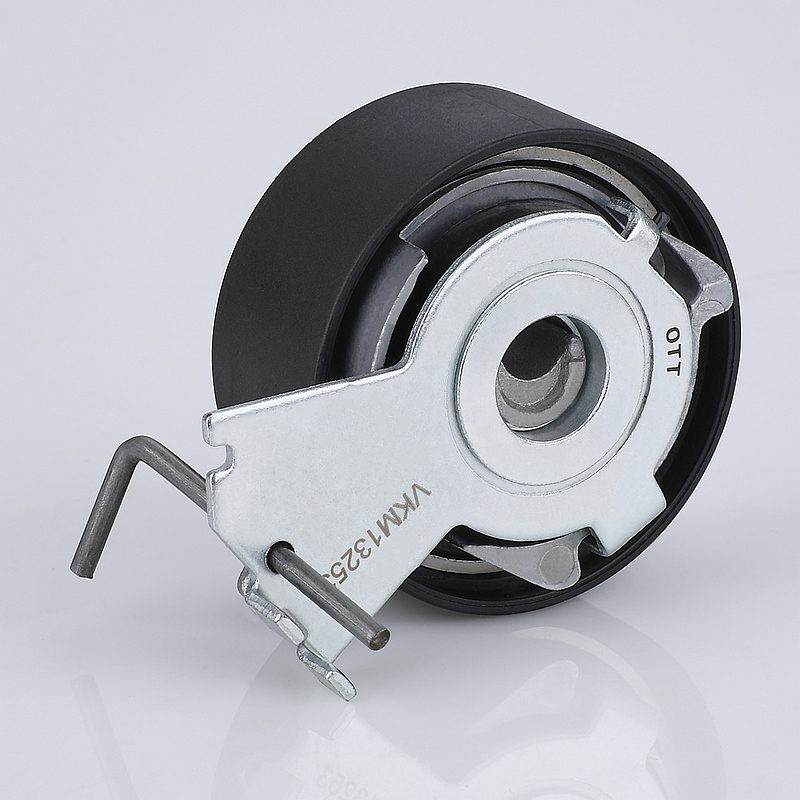
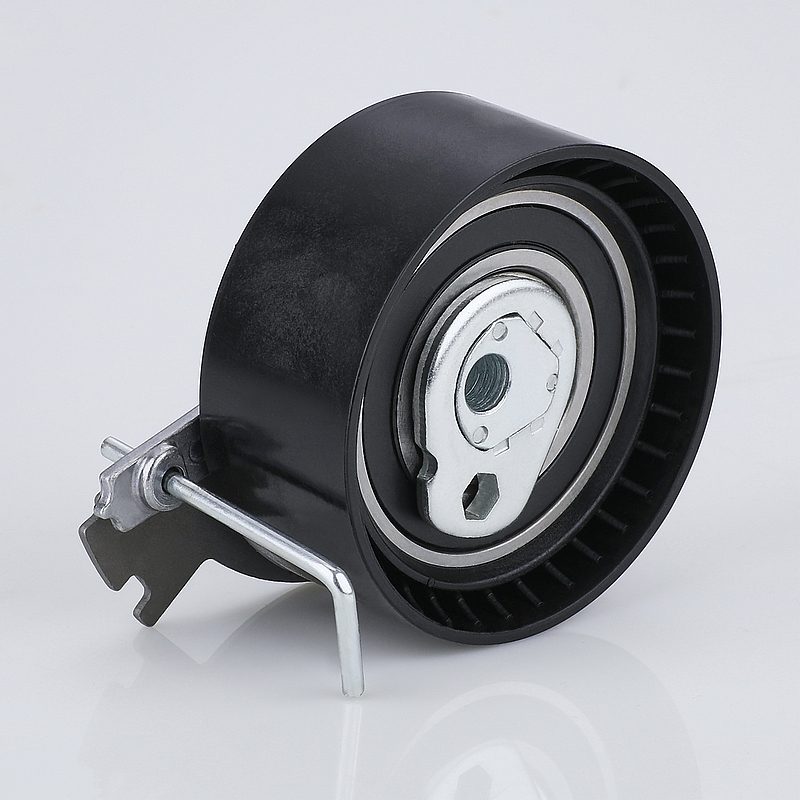
The tensioner consists of four key components: a mounting base that bolts to the engine block, a pivot arm that swings on a spring, a coil spring that provides constant force, and a pulley with a bearing inside. The spring pushes the pulley against the belt, and the bearing allows the pulley to spin freely at engine speed without generating friction or heat.
The bearing is the only wear component in this system. The spring and arm are mechanical and rarely fail. When a tensioner "goes bad," it is almost always the bearing that has worn out.
What Bearing Is Inside a Belt Tensioner?
This is the question most belt tensioner guides never answer. The bearing inside a tensioner pulley is a standard deep groove ball bearing — the same type used in thousands of industrial and automotive applications. The most common sizes are:
| Bearing Model | Dimensions (d x D x B) | Typical Tensioner Application |
|---|---|---|
| 6202 | 15 x 35 x 11 mm | Compact car serpentine tensioners |
| 6203 | 17 x 40 x 12 mm | Standard sedan tensioners |
| 6006 | 30 x 55 x 13 mm | SUV and light truck tensioners |
| 6007 | 35 x 62 x 14 mm | Heavy-duty and diesel tensioners |
| 6008 | 40 x 68 x 15 mm | Truck and commercial vehicle tensioners |
OTT supplies these bearings as bare inner bearings to tensioner pulley assembly plants in Turkey, Brazil, Russia, and the Middle East. These plants assemble the complete tensioner unit — combining OTT's bearing with a pulley housing, spring mechanism, and mounting bracket — then sell the finished product to aftermarket distributors for brands like Mercedes-Benz, Fiat, Renault, Peugeot, and Toyota.
View the full OTT tensioner bearing range: Tensioner & Idler Pulley Bearings
Tensioner Bearing vs Idler Pulley Bearing: What Is the Difference?
Both tensioners and idler pulleys contain bearings, but they serve different roles and face different stress profiles.
| Feature | Tensioner Bearing | Idler Pulley Bearing |
|---|---|---|
| Function | Maintains belt tension via spring force | Guides belt routing (no tension adjustment) |
| Load type | Dynamic — spring constantly pushes against belt | Static — fixed position, constant belt wrap |
| Speed | 800-1,000 RPM typical | 800-1,000 RPM typical |
| Temperature | -20 to 130 degrees C | -20 to 130 degrees C |
| Vibration | Higher — spring arm oscillates with RPM changes | Lower — fixed mounting, less vibration |
| Failure impact | Belt loses tension, slips, multiple systems fail | Belt tracking shifts, may jump off pulley |
Because tensioner bearings face higher dynamic loads and vibration than idler pulley bearings, they require better quality construction — specifically, tighter tolerances, vibration-dampening design, and high-temperature grease that will not break down over the bearing's service life.
5 Signs Your Belt Tensioner Bearing Is Failing
Catching a failing tensioner bearing early prevents belt failure and the cascading damage that follows. Here are the symptoms, in order from earliest to latest:
1. Squealing or Chirping at Startup
The earliest sign is a brief squeal when you start the engine that fades after a few seconds. This happens because cold grease inside the bearing is stiff, and the bearing surfaces are not yet lubricated. As the grease warms up, the noise disappears — until the bearing degrades further.
2. Grinding Noise That Increases With RPM
As the bearing raceways develop wear, a continuous grinding or humming sound develops. The pitch rises with engine RPM because the bearing spins faster. This noise is often mistaken for an alternator bearing — to isolate, remove the belt and spin the tensioner pulley by hand. A healthy bearing spins smoothly and silently.
3. Visible Pulley Wobble
A worn bearing allows the pulley to tilt or wobble as it spins. With the engine running, look at the tensioner pulley from the side — any visible wobble means the bearing has excessive internal clearance and should be replaced immediately. Even 0.1mm of wobble causes uneven belt wear and noise.
4. Belt Wear Patterns
A failing tensioner bearing causes the belt to track unevenly, producing asymmetric wear — one edge of the belt wears faster than the other, or the belt develops cracks on one side only. If you are replacing belts more frequently than expected (before 60,000 miles), the tensioner bearing is a likely cause.
5. Tensioner Arm Oscillation
A healthy tensioner arm sits still while the engine runs — the spring provides constant, steady pressure. If the arm visibly bounces or oscillates (you can see it vibrating), the bearing is worn enough to allow the pulley to judder against the belt. This is the last stage before the bearing seizes.
What Makes a Quality Tensioner Bearing? A Manufacturer's View
OTT has supplied tensioner bearings to pulley assembly plants for over a decade. Here is what separates a bearing that lasts 100,000 miles from one that fails at 30,000:
Seal Design: The Most Critical Factor
Engine bay environments are harsh — oil mist, road spray, brake dust, and temperature cycling from -20 to 130 degrees C. The bearing seals must keep contaminants out while retaining grease under all conditions. OTT tensioner bearings use double-lip contact seals (or triple-lip for heavy-duty applications) that maintain sealing integrity across the full temperature range. Cheaper bearings often use single-lip seals that allow grease to leak out by 50,000 miles.
Grease Selection
Standard bearing grease breaks down above 120 degrees C — well within normal engine bay temperatures. OTT tensioner bearings use high-temperature synthetic grease rated for continuous operation at -40 to 150 degrees C, with a dropping point above 200 degrees C. The grease fill quantity is calibrated for the bearing's service life — approximately 30-40% of the free space, optimized for minimum drag and maximum protection.
Housing Compatibility
Many tensioner pulleys use glass-fiber reinforced plastic housings that expand at a different rate than the steel bearing outer ring. If the bearing outer diameter tolerance is not precise, the fit loosens as the housing heats up, causing the bearing to spin inside the housing (a condition called "creep"). OTT machines bearing outer diameters to P6 tolerance (0 to -8 micrometers from nominal) to ensure consistent press-fit across the operating temperature range.
Vibration Dampening
Tensioner springs oscillate with engine RPM changes — every acceleration and deceleration creates load fluctuations on the bearing. Quality tensioner bearings use optimized internal geometry (contact angle, ball count, cage design) that dampens these vibrations rather than amplifying them. OTT tensioner bearings have passed 500+ hours of continuous life testing — matching the durability of imported brands like INA, SKF, and Gates.
How OTT Supplies the Tensioner Industry
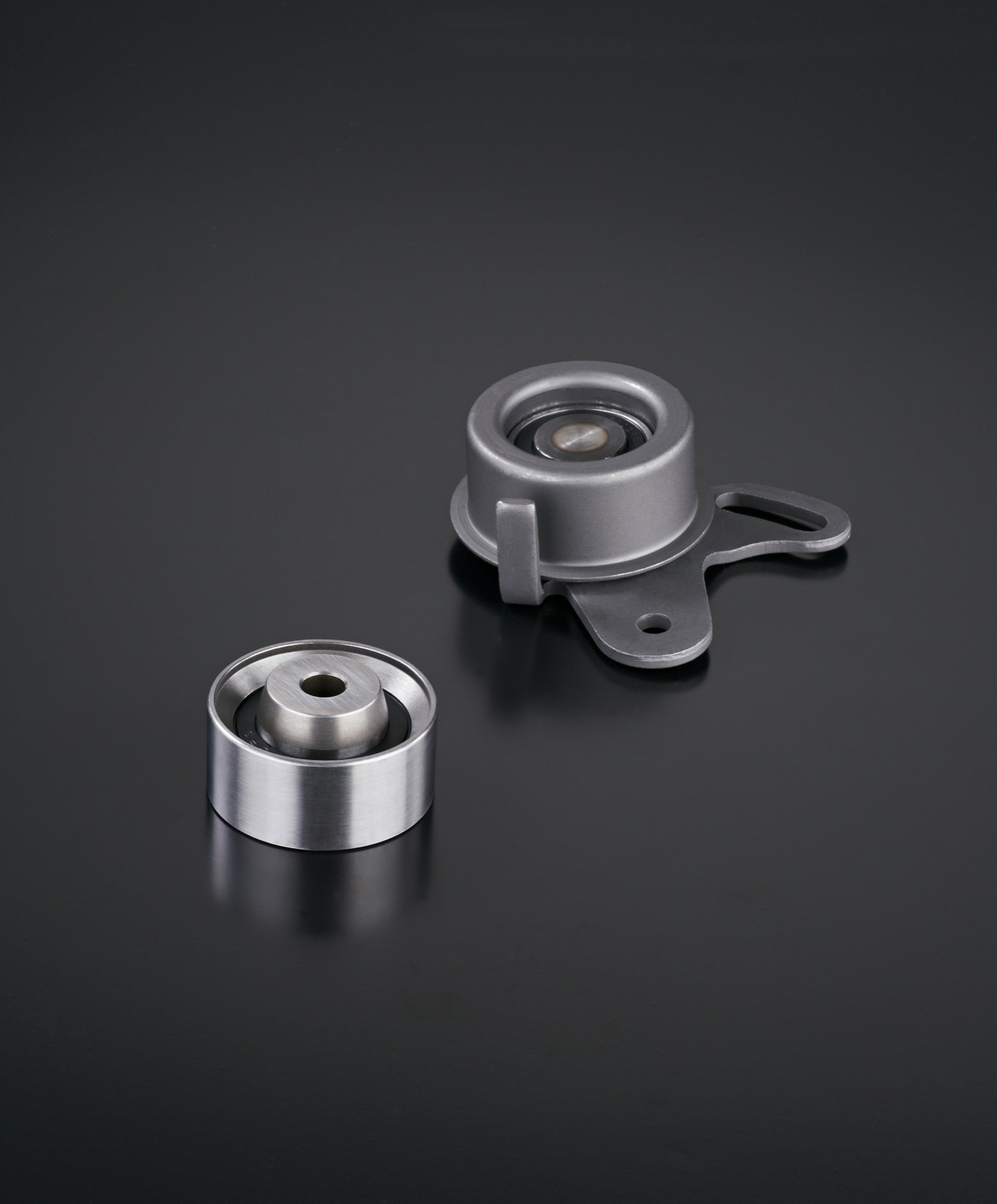
OTT's role in the tensioner supply chain is specific and important to understand. We do not manufacture complete tensioner assemblies (the spring-loaded units with adjustable arms). Instead, we manufacture the inner bearings and simple idler pulleys that go inside tensioner assemblies.
Our customers are tensioner pulley assembly plants — companies like BMS in Turkey that buy bare bearings from OTT, combine them with pulley housings and spring mechanisms in their own factories, and sell completed tensioner assemblies for Mercedes-Benz, Fiat, Renault, and other vehicle aftermarket applications.
This is why OTT can offer bearing quality that matches INA, SKF, and Koyo at a competitive price — we specialize in what we do best (precision bearing manufacturing) while our assembly plant customers handle the application engineering and market distribution.
What We Supply
- Bare tensioner bearings: 6202, 6203, 6006, 6007, 6008 series and custom sizes
- Simple idler pulleys: bearing + housing shell (no spring adjustment mechanism)
- Custom configurations: special seals, grease formulations, extended inner rings
What We Do Not Supply
- Complete tensioner assemblies with spring mechanisms
- Automatic belt adjustment devices
- Hydraulic tensioners
Tensioner Bearing Cross-Reference
| OTT Model | INA Equivalent | SKF Equivalent | Vehicle Applications |
|---|---|---|---|
| VKM74200 | F-239187.01 | VKM 74200 | Japanese & Korean timing systems |
| VKM13100 | F-553337.01 | VKM 13100 | Peugeot, Citroen, Renault |
| VKM23246 | — | VKM 23246 | European diesel engines |
| DH42-23 | — | — | Complete idler assembly replacement |
For the complete OTT tensioner and idler pulley bearing catalog, including all available cross-references to INA, SKF, Gates, Dayco, and Koyo part numbers, visit our Tensioner & Idler Bearing Product Page.
Related Guides
- Tensioner & Idler Pulley Bearings — full OTT product catalog
- Car Engine Bearing Applications — all engine bearing types explained
- Alternator Bearing Replacement Guide — another essential engine bearing
- About OTT Bearing — factory tour and quality certifications