A timing belt tensioner has one job: keep the timing belt tight enough to maintain perfect synchronization between the crankshaft and camshaft. If it fails, the timing belt slips or breaks, and on interference engines — which is most modern engines — pistons slam into open valves. The repair bill: $1,000 to $4,000 or more. This guide explains how timing belt tensioners work, what symptoms to watch for, and why the bearing inside the tensioner is the component that determines its lifespan.
How a Timing Belt Tensioner Works
The timing belt must maintain a precise relationship between the crankshaft (which moves the pistons) and the camshaft (which opens and closes the valves). If the belt stretches, slips, or jumps even one tooth, the engine timing is thrown off — causing misfires, rough running, or catastrophic valve-piston contact.
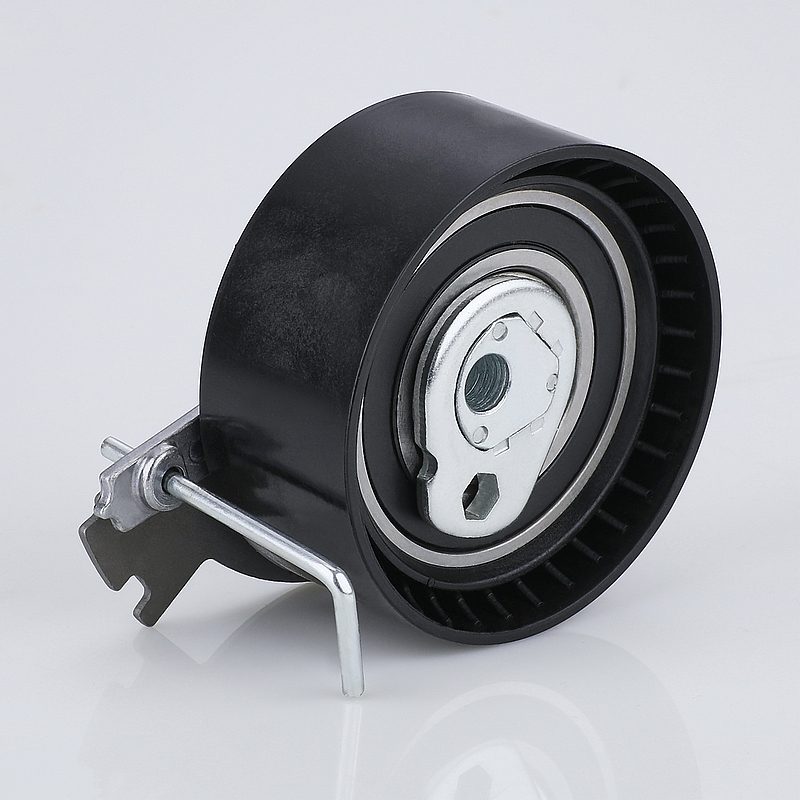
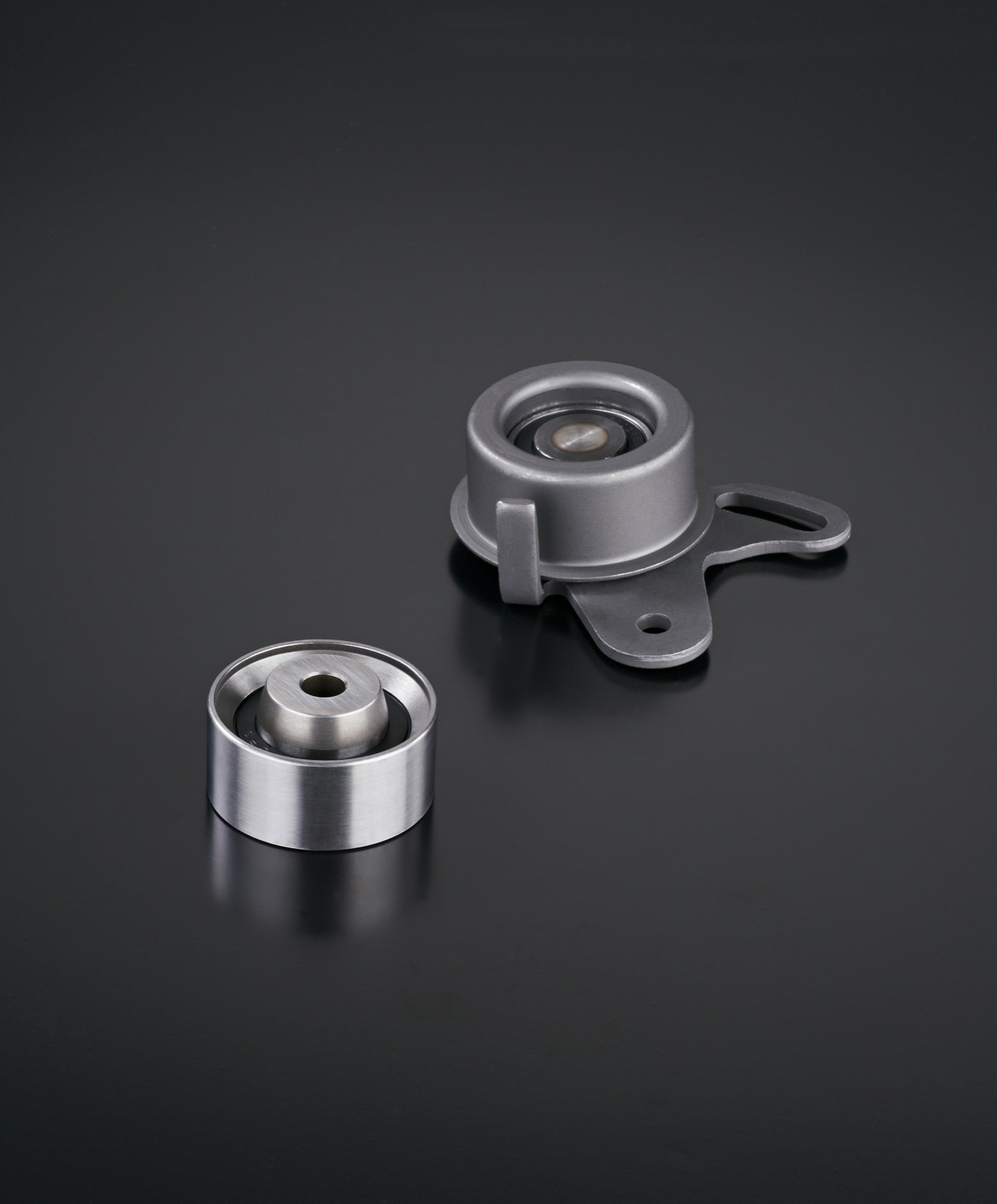
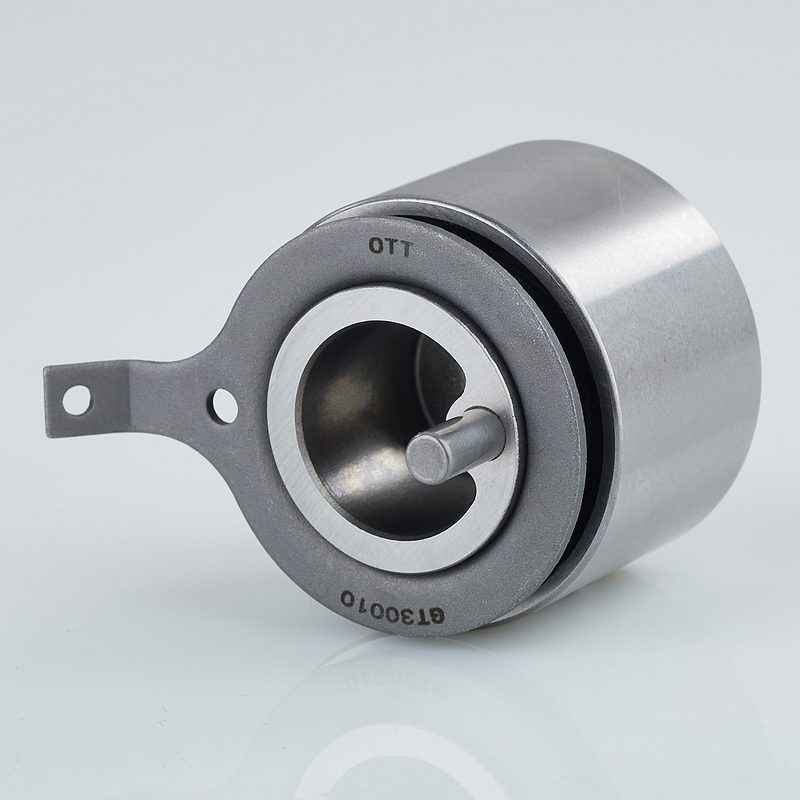
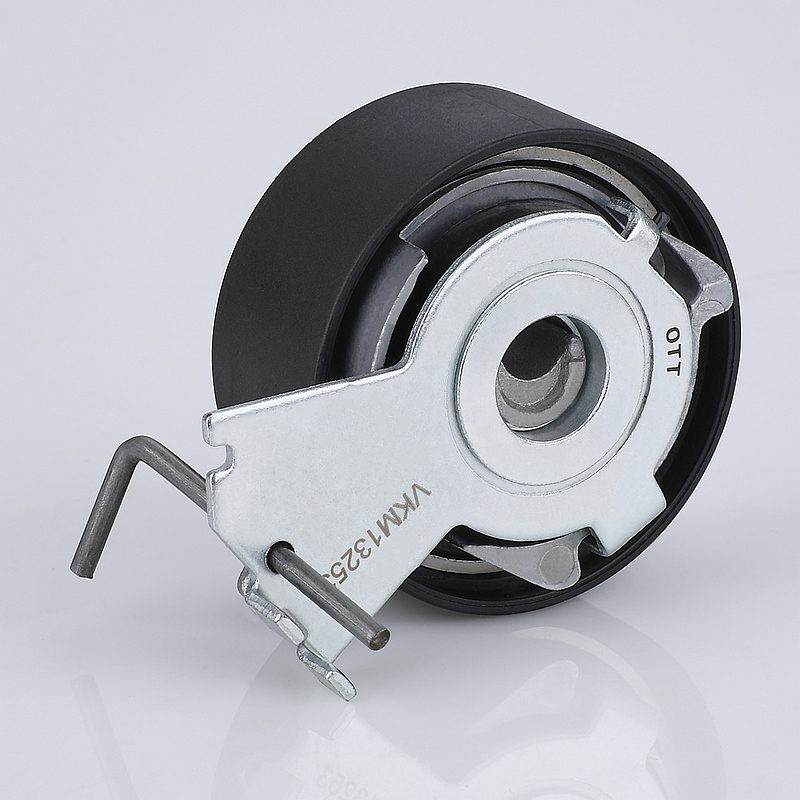
The tensioner prevents this by applying constant spring pressure against the belt. Most timing belt tensioners use a spring-loaded arm with a smooth pulley that presses against the belt's backside. Inside the pulley is a single deep groove ball bearing — typically a 3203 (17x40x12mm double-row) or 6007 (35x62x14mm) depending on the tensioner design.
When the engine runs, the belt pulls the pulley at speed while the spring pushes back. The bearing is the interface between these two forces — it allows the pulley to spin freely while the arm remains stationary. If the bearing seizes, the pulley stops spinning, the belt overheats from friction, and failure follows within minutes.
Timing Belt Tensioner vs Serpentine Belt Tensioner
These two tensioners are often confused but serve very different purposes with very different consequences of failure.
| Feature | Timing Belt Tensioner | Serpentine Belt Tensioner |
|---|---|---|
| Location | Inside the timing cover (hidden) | External, visible on engine front |
| Belt it tensions | Timing belt (crank-to-cam sync) | Serpentine belt (accessories) |
| Failure consequence | Engine destruction possible | Accessories stop (alternator, A/C) |
| Replacement interval | 60,000-100,000 miles | 60,000-100,000 miles |
| Can you see it failing? | No — hidden behind cover | Yes — visible wobble/noise |
The critical difference: a serpentine belt tensioner failure is an inconvenience. A timing belt tensioner failure is an engine killer. This is why timing tensioners should be replaced preventively at the recommended interval — not when symptoms appear.
For a detailed guide on serpentine belt tensioners, see our Belt Tensioner Bearing Guide.
5 Symptoms of a Failing Timing Belt Tensioner
Because the timing belt tensioner is hidden behind the timing cover, diagnosis is more difficult than a serpentine tensioner. These are the symptoms to watch for:
1. Rattling or Ticking From the Timing Cover
A loose tensioner allows the timing belt to flap slightly, creating a rhythmic ticking or rattling sound from the front of the engine. This sound is different from valve train tick — it is belt-frequency noise that follows engine RPM but has a slightly irregular, flapping quality.
2. Engine Misfires and Rough Running
When the tensioner loses enough tension for the belt to skip a tooth, the engine timing shifts. This causes misfires (you feel hesitation or stumbling during acceleration), rough idle, and reduced power. The check engine light may illuminate with codes related to camshaft position or misfires.
3. Engine Will Not Start or Starts Hard
A belt that has jumped multiple teeth throws the timing far enough off that the engine will not start, or cranks for a long time before catching. If your engine suddenly becomes hard to start with no other obvious cause, timing belt tension should be investigated.
4. Check Engine Light (P0016-P0019 Codes)
Modern engines have camshaft position sensors that detect timing discrepancies. Codes P0016 through P0019 (Crankshaft/Camshaft Position Correlation) specifically indicate timing misalignment, which can be caused by a loose tensioner allowing the belt to slip.
5. Visible Belt Wear (During Service)
If the timing belt shows uneven wear, fraying on one edge, or cracking on the tooth surface, the tensioner is not maintaining proper tension or alignment. This is only visible during a timing belt service when the cover is removed — another reason to inspect the tensioner carefully during every belt replacement.
Why the Bearing Inside Matters
The tensioner spring and housing are simple mechanical components that rarely fail on their own. The bearing is what wears out — and when it does, the tensioner loses its ability to hold the pulley in position, leading to belt slip and the symptoms described above.
Quality timing belt tensioner bearings must meet several demanding requirements:
Temperature resistance: Timing belt tensioners operate inside the timing cover where temperatures reach 100-120 degrees C from engine heat and limited airflow. The bearing grease must maintain viscosity at these temperatures.
Low friction: Any bearing friction reduces the spring's effective tension on the belt. High-quality tensioner bearings use precision-ground raceways and G10-grade steel balls to minimize friction.
Long life under constant load: Unlike wheel bearings that see variable loads during driving, tensioner bearings carry constant spring preload for every minute the engine runs. This continuous loading accelerates fatigue, requiring bearing steel with excellent fatigue properties.
Seal integrity: Oil mist, coolant vapor, and timing belt dust are all present inside the timing cover. The bearing seals must exclude these contaminants for the full 60,000-100,000 mile service interval.
OTT tensioner bearings address all of these requirements with P6 precision grinding, high-temperature grease (rated to 150 degrees C continuous), double-lip seals, and GCr15 bearing steel with optimized heat treatment. Our bearings have passed 500+ hours of continuous life testing, matching the durability grade of premium imported brands.
When to Replace: Follow the Interval, Not the Symptoms
Unlike serpentine tensioners where you can wait for symptoms, timing belt tensioners should be replaced preventively at the manufacturer's recommended timing belt interval — typically 60,000-100,000 miles or 7-10 years.
The reason: by the time symptoms appear, the bearing is already significantly degraded, and the risk of belt skip or breakage is imminent. Since the tensioner is accessible only during a timing belt service (which involves significant labor to remove the timing cover), replacing it during that service adds only $20-$80 in parts cost.
Always replace together: timing belt + tensioner + idler pulleys + water pump (if driven by the timing belt). Reusing any of these components to save cost is false economy — the labor to access them again if one fails is far more expensive than the parts.
OTT Timing Belt Tensioner Bearings
OTT supplies timing belt tensioner bearings to assembly plants that manufacture complete tensioner units for the automotive aftermarket. Our tensioner bearing models include the VKM74200 (Japanese and Korean applications), VKM13100 (Peugeot, Citroen, Renault), and various standard series bearings in custom configurations.
We supply bare bearings to tensioner assembly plants — not complete tensioner units. Our customers combine OTT bearings with their own pulley housings and spring mechanisms to produce finished tensioner assemblies.
Related Guides
- Belt Tensioner Bearing Guide — serpentine belt tensioner explained
- Tensioner & Idler Bearing Catalog — full OTT product range
- Car Engine Bearing Applications — all engine bearing types
- Alternator Bearing Replacement — another critical engine bearing