Automotive parts distributors and alternator remanufacturers face the same sourcing decision repeatedly: buy from a manufacturer or from a trading company? The price difference is often small, but the quality difference can be significant — especially for precision components like alternator bearings where Z3V3 noise grade is non-negotiable. This guide explains how to evaluate your supply chain for alternator bearings and what separates a real manufacturer from a reseller.
Why Alternator Bearings Require Stricter Quality Standards
Alternator bearings are not standard deep groove ball bearings despite using the same ISO dimensions (6201, 6202, 6203, 6303, etc.). The key differences:
- Speed: Alternator pulleys spin at 6,000–18,000 RPM — 2.5–3x engine speed. Standard P0 bearings are not rated for this.
- Noise: Any vibration above Z3V3 grade produces an audible whine at alternator speeds. Customers notice immediately.
- Temperature: Engine bay temperatures reach 120–150°C. Bearing grease must handle –40°C to +150°C without degrading.
- Endurance: OEM alternators are designed for 150,000+ miles. The bearings must match this service life.
A trading company that sources bearings from multiple factories cannot guarantee these specifications are met consistently. A manufacturer controls the grinding process, grease selection, cage design, and vibration testing — the four variables that determine whether an alternator bearing passes or fails in the field.
Manufacturer vs Trading Company: What You Actually Get
| Factor | Certified Manufacturer | Trading Company |
|---|---|---|
| Quality consistency | Controlled — same machines, same workers, same process | Variable — depends on which factory they buy from this month |
| Noise grade certification | Z3V3 tested in-house, 100% of output | Claimed but rarely verified independently |
| IATF 16949 | Issued to factory — covers production process | May hold ISO 9001 for office operations, not production |
| Traceability | Full batch traceability from raw material to shipment | Limited to purchase order — cannot trace to production batch |
| Custom specifications | Can modify grease, seal type, tolerance class | Can request, but cannot control factory execution |
| Pricing | Factory cost + manufacturer margin | Factory cost + factory margin + trading margin |
| Endurance data | In-house or OEM-verified test reports available | Rarely available — sourced from factory marketing materials |
What to Ask a Potential Alternator Bearing Supplier
Before placing a bulk order with any alternator bearing supplier, ask for:
1. Factory Address vs Office Address on Certification
IATF 16949 and ISO 9001 certificates list the scope and the site address. A trading company's certificate covers its quality management of the purchasing process, not the manufacturing process. The certificate address should match a production facility, not a trading office.
2. Vibration Test Reports
Ask for a Z3V3 vibration test report for the specific models you're ordering. A manufacturer can pull this from production records. A trading company will need to request it from their supplier — which takes time and often arrives as an unverifiable document.
3. Steel Material Certification
Alternator bearings require GCr15 (AISI 52100) chromium bearing steel. Ask for the material certificate (mill cert) linking the steel lot to your bearing models. This is standard practice in the automotive supply chain.
4. Heat Treatment Records
Carbonitriding (the advanced heat treatment that significantly improves fatigue life) is documented in production records. Ask to see process parameters — temperature, atmosphere, time. A trading company cannot provide this.
5. Sample Batch Vibration Test
Before committing to bulk volume, request a sample batch and have the bearings independently vibration-tested against Z3V3. The cost of a third-party test is trivial compared to the cost of a warranty return claim.
Common Bearing Models for Wholesale Alternator Supply
The most frequently traded alternator bearing models across all major OEM applications:
| Model | Dimensions | Primary Application | Noise Grade |
|---|---|---|---|
| 6201-2RS | 12×32×10 mm | Rear bearing, most brands | Z3V3 |
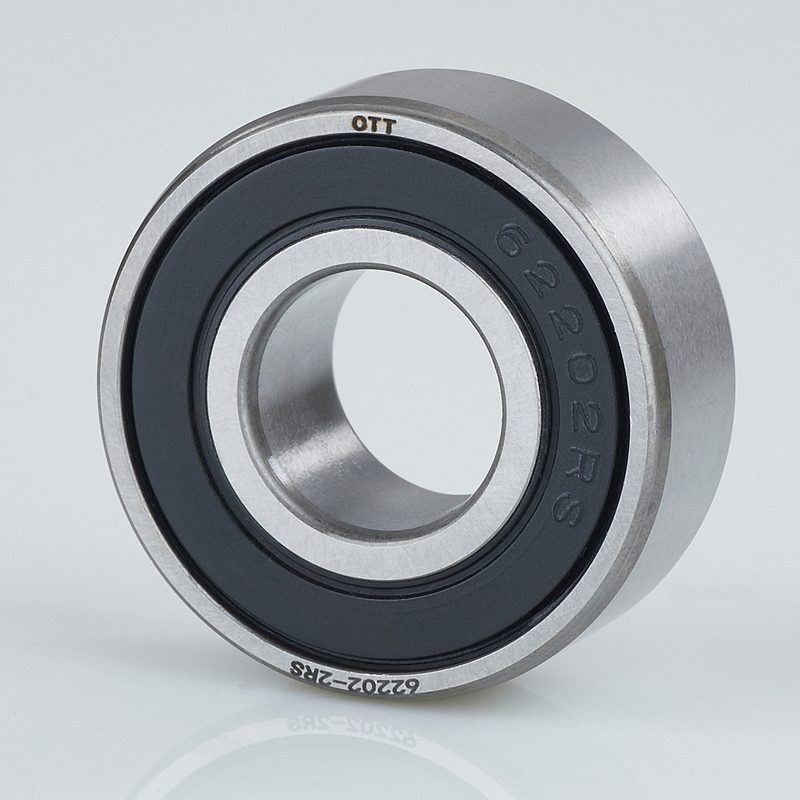
| 6202-2RS | 15×35×11 mm | Denso front, universal | Z3V3 |
| 6203-2RS | 17×40×12 mm | Hitachi, Mitsubishi front | Z3V3 |
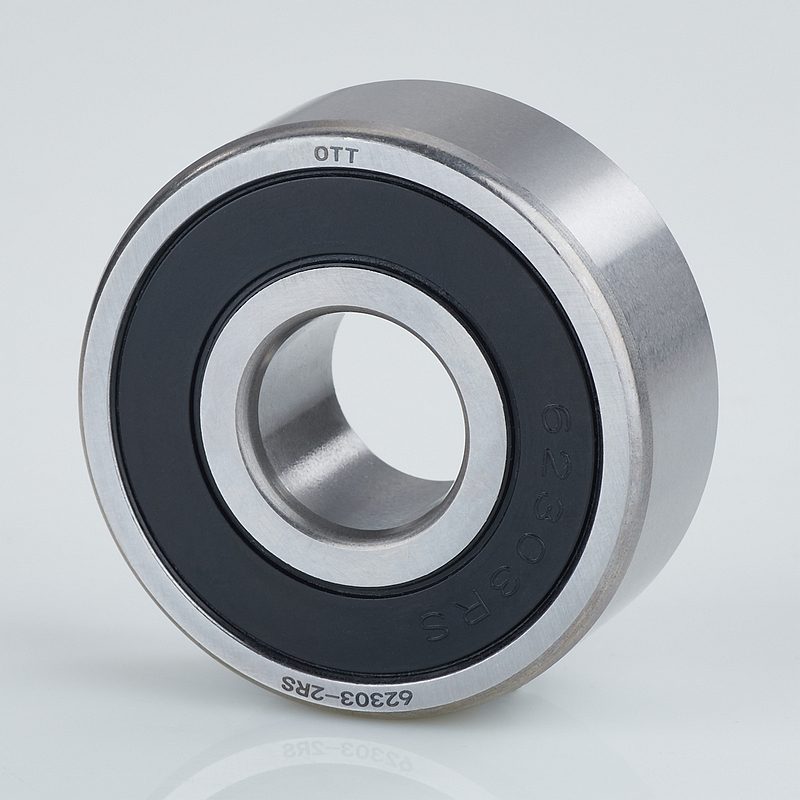
| 6303-2RS | 17×47×14 mm | Bosch, Valeo front | Z3V3 |
| 6304-2RS | 20×52×15 mm | Lucas, CAV heavy-duty | Z3V3 |
| B15-69D | 15×35×13 mm | Honda/Acura/Toyota (OE) | Z3V3 |
OTT: IATF 16949 Certified Alternator Bearing Manufacturer
OTT Bearing is an IATF 16949-certified manufacturer based in China supplying alternator bearings to distributors in 50+ countries. Key facts for wholesale buyers:
- 60+ models in stock: d = 8–32mm, covering all major OEM alternator applications
- Z3V3 noise grade: 100% vibration-tested in-house before shipment
- 1,004-hour endurance: verified by a Russian OEM partner — equivalent to 41 days of non-stop operation
- Cold-start rated: –60°C verified through OEM testing
- MOQ: 1,000 pcs per model; samples available
- OEM branding: laser engraving + custom packaging for your label
View the full OTT alternator bearing catalog or contact us for wholesale pricing.
Related Resources
- Alternator Bearing Replacement Guide — sizes, symptoms, and selection
- Denso Alternator Bearing Cross-Reference — specific Denso models
- OTT 1,004-Hour Endurance Test — verified test results
- Alternator & Starter Bearing Catalog — wholesale supply